
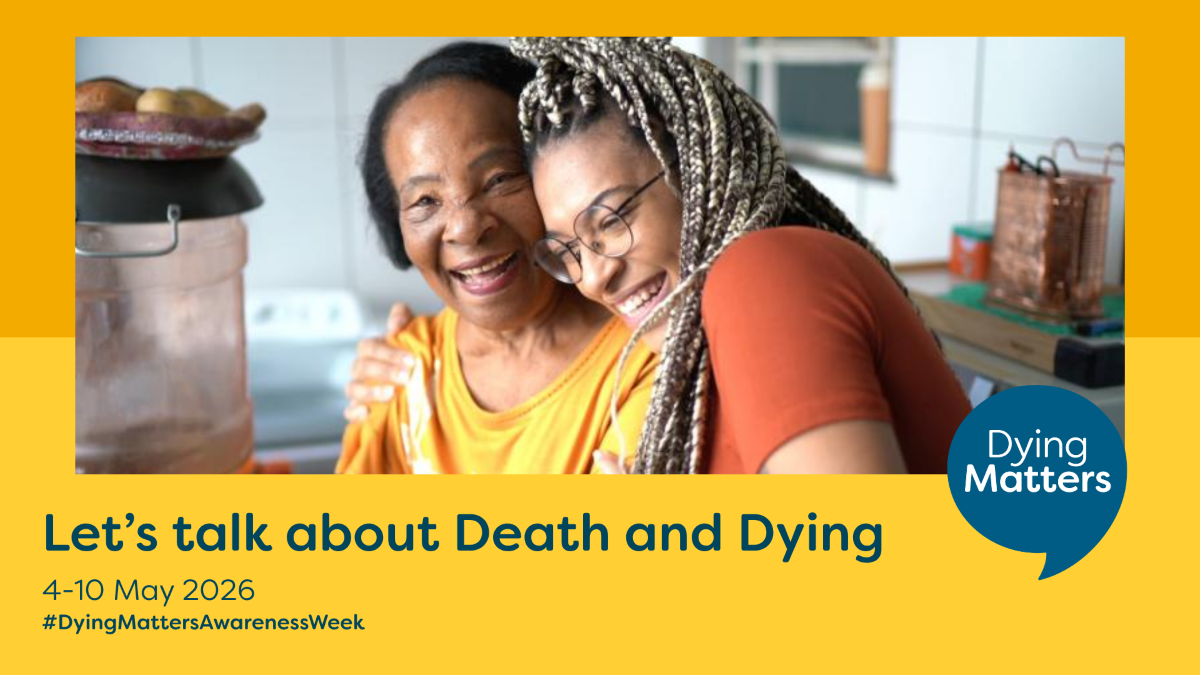
Each year, Dying Matters Awareness Week encourages people across the UK to talk more openly about death, dying and bereavement. Led by Hospice UK, the campaign aims to break down the stigma that can surround these conversations and help make them a natural part of everyday life. Because while death is something we will all experience, talking about it can still feel difficult, uncomfortable or even taboo.
27% of people find it hard to talk about death with family or friends, and 30% bottle their feelings up. If we don’t talk about death and dying and bereavement, it can be harder to cope when we experience it.*
That’s why this week matters. It creates space for honest conversations, helping individuals, families and communities feel more prepared, supported and connected when facing loss.
At Jessie May, these conversations are something we try to encourage all year round -always at a pace that feels right for our families.
Why These Conversations Matters
Jessie May Bereavement Support provides space and time in whatever way feels most comfortable: at home, on a walk, meeting for a coffee. Grief is complex, and support groups are not for everyone. That’s why it’s so important to make conversations easier to approach in everyday life. Even simply asking how someone is doing, and giving them the time and space to talk, can be incredibly helpful.
In society, at work, and sometimes even within families, grief can be a difficult subject. This can leave families feeling as though they should be “getting over it” or finding ways to cope alone.
Dying Matters Week creates an opportunity to open up conversations about death, dying and bereavement, and to make them a natural part of everyday life. At Jessie May, we try to do this throughout the year by creating opportunities for informal, community‑based support.
How These Conversations Help Families
Our support is guided by the parents. It is up to them what feels helpful to talk through with someone they get to know and trust. Support doesn’t just focus on grief itself – sometimes we talk about life around the grief, because life without their child can feel as though the world has shifted. This might include a loss of purpose, missing the role of caring, or other challenges.
Kind and compassionate listening gives families the chance to share feelings that can be incredibly hard to verbalise. There is often a tendency to say “I’m doing ok” because explaining how you really feel can be overwhelming. Time, space and gentle reassurance are needed for that.
Talking through feelings in an unhurried way with someone you trust can help with processing what is happening, acknowledging the grief, and reflecting on the child’s life, if and when that feels right.
The Kind of Support Jessie May Provides
Parents have told us that the idea of attending a bereavement support group can feel daunting – not knowing anyone, feeling vulnerable, or worrying they’ll be expected to talk in a circle. That’s why we offer one‑to‑one support in the community: at home, over a coffee, or on a walk if that feels easier. Sometimes simply being outdoors makes starting a conversation feel more natural.
We also host informal coffee mornings where conversation flows gently and naturally. These sessions are led by parents, for parents. There is no agenda, no pressure to share stories, and no discussion of grief theories. It’s more like a pop‑up coffee shop – a safe, supportive space where conversations about death, dying and bereavement are welcome.
At our last meet‑up, one parent said, “You would never know we were at a bereavement support group,” which captures exactly what we aim for.
Alongside this, we host relaxation days and are working towards offering a supper club and a Dads’ Sunday brunch.
Sacha’s Story: The Power of Talking
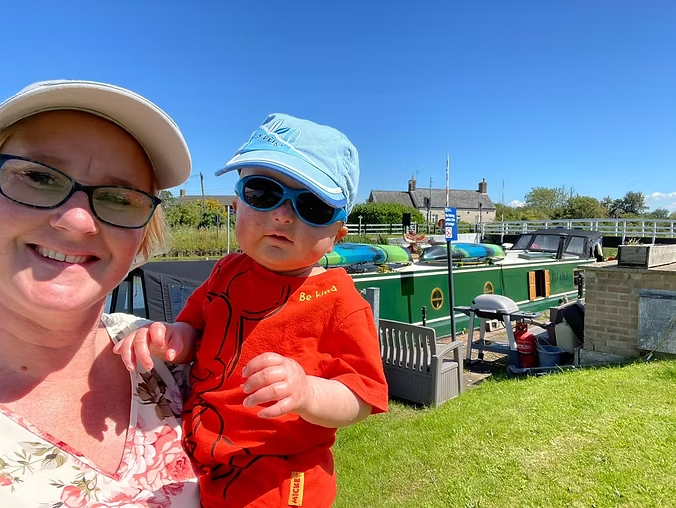
For Mum Lisa, whose son Sacha was cared for by Jessie May, bereavement support has played an important role in navigating life after loss.
Through the support she has received from Jessie May, Lisa has found comfort in being able to talk openly about Sacha – keeping his memory present and part of everyday life. Having someone who listens without judgement or expectation has helped her process her grief in a way that feels natural to her.
Lisa continues to speak about him so proudly, openly, and with so much love. She has found that talking about Sacha not only keeps him close, but also helps others understand what families like hers go through.
“The more awareness there is around a child’s death, and how it affects parents and siblings, the better. It would be wonderful if sharing our experience helped others understand how to support families through such a hard time. My way of feeling close to Sacha is to keep sharing him with people and to talk about him. But everyone’s way is different – there is no right or wrong.”
Her experience reflects something we see time and time again: being able to speak about a loved one, to say their name, and to share memories can be incredibly powerful in grief.
Read Sacha’s full story here – Sacha’s Story 💜 – Jessie May
Keeping the Conversation Going…
Dying Matters Awareness Week reminds us that we don’t need to have all the answers – we just need to be willing to start the conversation.
At Jessie May, we will continue creating spaces where families feel safe to talk, reflect and be heard – not just this week, but every week of the year.
Because sometimes, the most meaningful support begins with a simple conversation.
*Hospice Uk