At Jessie May, we support a number of children living with Spinal Muscular Atrophy (SMA) and their families, providing specialist nursing care at home during some of the most challenging times. One of those children is Fenn.
Following the recent announcement by Jesy Nelson about the diagnosis of her twins, we want to stand with her and her family. We are grateful to Jesy for speaking openly and helping to shine a light on SMA. We understand how overwhelming a diagnosis can be, and we hope that by sharing real family experiences, we can help raise awareness, improve understanding, and encourage earlier diagnosis for other children.
Fenn’s mum, Wendy, who is a family we support through Jessie May, has shared their story to highlight the early signs of SMA and, crucially, why fast action and urgent diagnosis can be life-saving. The blog also shares what life is like living with SMA day-to-day, Fenn’s personality and spirit, and the difference that Jessie May’s support has made to their family. Wendy’s experience shows just how important it is for both parents and professionals to recognise the symptoms early and act quickly.
Wendy’s Story – Fenn’s diagnosis
We first approached our GP when Fenn was a few months old because she wasn’t meeting her milestones. I had seen a flyer for the Think 3 at 3 months campaign at some point, so decided to follow that guidance. We asked for Fenn to be tested for SMA, as we already knew there were carriers in our families. Unfortunately, our GP wasn’t familiar with the campaign or the urgency of SMA testing.
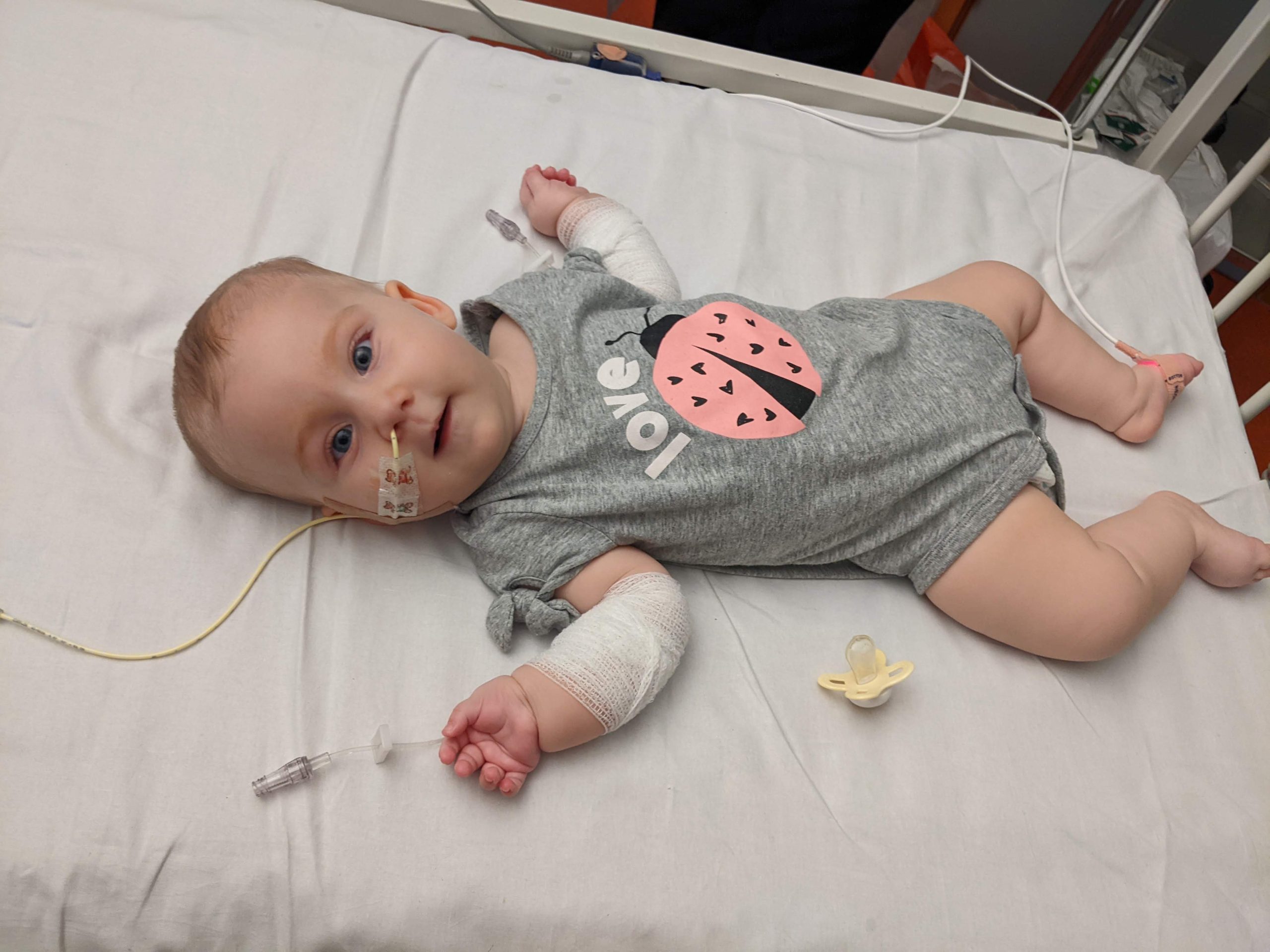
Our concerns weren’t taken seriously, and we were placed on waiting lists for over two months. During this time, Fenn deteriorated significantly, and we eventually took her to A&E due to severe weight loss. Once we reached hospital, everything moved very quickly, and within weeks Fenn’s life was saved by gene therapy treatment.
We were very lucky that Bristol Children’s Hospital is one of only a few specialist hospitals in the UK offering SMA treatments, meaning the professionals there were familiar with the condition.
If Fenn had been tested at birth, she could have been treated before her deterioration began and her life would look completely different. It’s upsetting to think about, and difficult to continue seeing new cases of late SMA diagnoses even now. We knew something was wrong, but we also wanted to trust the doctors who told us not to worry and to be patient. In hindsight, waiting patiently was the worst thing we could have done.
Our advice to other parents is to familiarise yourself with this campaign and make sure your GP is aware of it too. If you think your child has SMA, time is absolutely critical. Children can be helped, but fast action makes all the difference. If your GP isn’t taking your concerns seriously, don’t wait – take your child to A&E, ideally at a larger specialist hospital. That’s what we wish we had done.
You can find more information here:
https://www.think3at3months.co.uk/
Early signs we noticed
Fenn was born a month early, so we were told her milestones would likely be delayed. However, by four months she wasn’t engaging in tummy time or lifting her head or legs. She had lifted her legs in her early months, but then lost this ability.
I noticed at baby groups that she was falling behind other babies, even those born much later than her. Before her hospital admission, she also started having dry nappies. Our GP told us she likely just had a cold and advised us to keep trying to feed her. When she lost a kilogram in a single week, we brought her straight to A&E.
Her deterioration was rapid. We had met with a geneticist two weeks before her first hospital admission — our first appointment after being on a waiting list. At that point, he said he didn’t think Fenn had SMA Type 1, although she might have a less severe form, and he took a blood sample for testing. By the time the results came back, we had already been in hospital for a week and Fenn needed help to eat and breathe.
What life is like for us as parents…
We both work from home, and I’ve reduced my hours so I can care for Fenn every day. We spend most of our time at home, where Fenn is most comfortable and all of her equipment is easily accessible. It’s also safer from an infection point of view, as even minor illnesses can quickly lead to hospital admissions.
Our friends and family are wonderfully understanding and supportive. We have lots of visitors and are able to cancel plans flexibly if anyone is feeling unwell. Outside of our monthly Jessie May visits and occasional stays at Charlton Farm, we don’t get a break from caring for Fenn, so Harry and I often take turns going out while the other stays with her.
We are constantly monitoring Fenn for signs of respiratory distress and are fully responsible for moving and positioning her throughout the day. We typically have at least three medical appointments a week, which means adjusting our working schedules regularly – something we’re very grateful our employers support. We also pay for a private physiotherapist to visit weekly. She’s Fenn’s most consistent non-parent presence, and Fenn is usually very excited for these sessions.
Day to day for Fenn
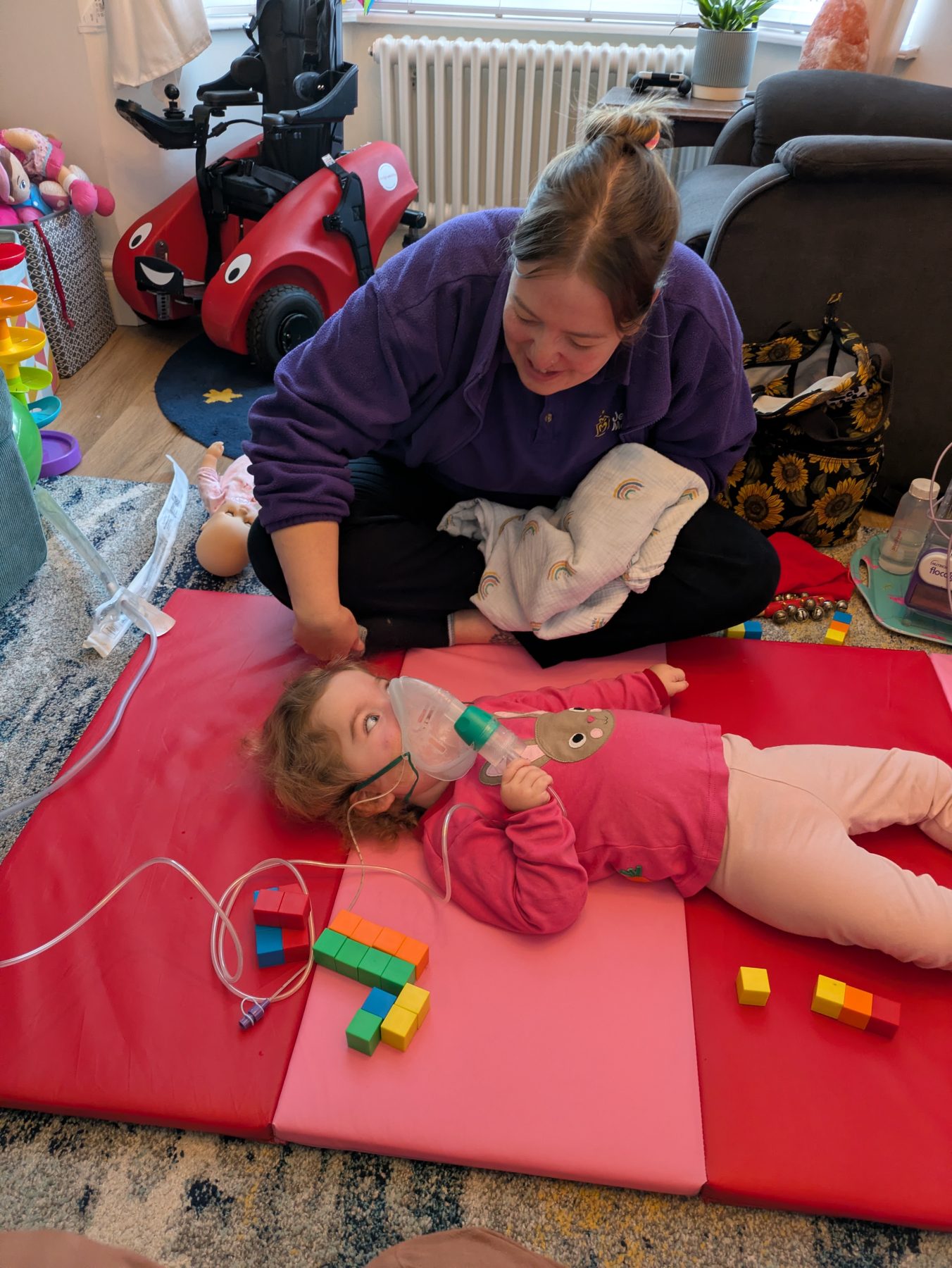
Each day includes two respiratory physiotherapy routines to keep Fenn’s airway clear, involving a nebuliser, chest pats, cough assist, and suction. After her morning session, we set Fenn up on her feeding pump and in her supportive seat or standing frame so she can play independently while I work nearby.
Fenn is fully NG fed, although she can have very small tastes of purées or sauces, and we hope her gastrostomy surgery will be scheduled soon. Every time we move her onto different equipment, such as her standing frame, we need to fit her spinal brace and ankle orthotics to support her scoliosis and prevent contractures from worsening.
At lunchtime we work on physiotherapy exercises before her nap. Fenn wears her BiPAP ventilator whenever she sleeps, alongside her lunchtime NG feed. Throughout the day she takes medication to help manage saliva production — something that has been life-changing for her, as she previously struggled constantly and required frequent suction.
Evenings usually include more physiotherapy and her second respiratory routine. Fenn has a Wizzybug, and since moving into a bungalow she loves driving around the house and visiting Harry in his office. Aside from time in her Wizzybug, Fenn cannot move independently and relies entirely on us to move and position her throughout the day.
At the moment, Fenn doesn’t spend much time around other children due to infection risks and some close calls with toddlers pulling at her NG tube. As she grows stronger — and hopefully once the NG tube is removed — we’re hoping she can start nursery later this year, which would be wonderful for her social and language development.
The person behind the diagnosis: Fenn 💜
We just wanted to share a little more about Fenn’s personality and the positives with our situation. It’s not the life we would choose for her, and nothing can make up for what she’s lost, but Fenn leans into it her with her whole personality. She loves to cuddle, beckons us in to boop our noses, and laughs for as long as we can tickle her… and then asks for more.
She’s stubborn, tenacious and brave, willing herself through physio sessions and barely flinching at a blood test. We have no standard set of milestones for Fenn, so when she wakes up from a nap and balances her own head for the first time, or works out how to push a button on a toy that’s always been too tough for her, it’s amazing and unexpected.
She loves her people, her Jessie May nurses, physios and other medical teams, and we are so grateful to all of them.
Jessie May’s Help
For Fenn and her parents, the arrival of Jessie May earlier this year marked a turning point. After months of hospital stays, medical emergencies, and the intense learning curve of caring for a child with complex needs, the family suddenly had a team they could trust. Nurses, Lois and Lizzie now visit at least once a month, bringing not only clinical expertise but genuine warmth and familiarity. Fenn lights up when they arrive. She chats with them in ways she doesn’t with everyone, listens to music they play for her, and enjoys the full, focused attention that can be hard to give when care is so hands‑on at home. One summer afternoon, her mum looked out into the garden to find Fenn fast asleep in Lois’s lap, cradled gently – a moment that captured just how safe and loved she feels with them.
For her parents, the support has been just as transformative. Before Jessie May, leaving Fenn with anyone else felt impossible; her mum once wrote a four‑page instruction booklet before a short hospice visit. Now, she’s learned to trust the nurses completely. Their visits give the family precious breathing space – time to work, rest, or simply do things that aren’t possible with Fenn’s equipment and care needs. They’ve used those hours for everything from yoga sessions and eye appointments to a CPR course and even the occasional meal out together. And because the nurses come to the house, the support is easy, accessible, and free from the stress of packing medical equipment or arranging transport. As Fenn grows, the family is excited to join more Jessie May events too, where it’s a chance to meet other families and feel part of a wider community that understands their world.