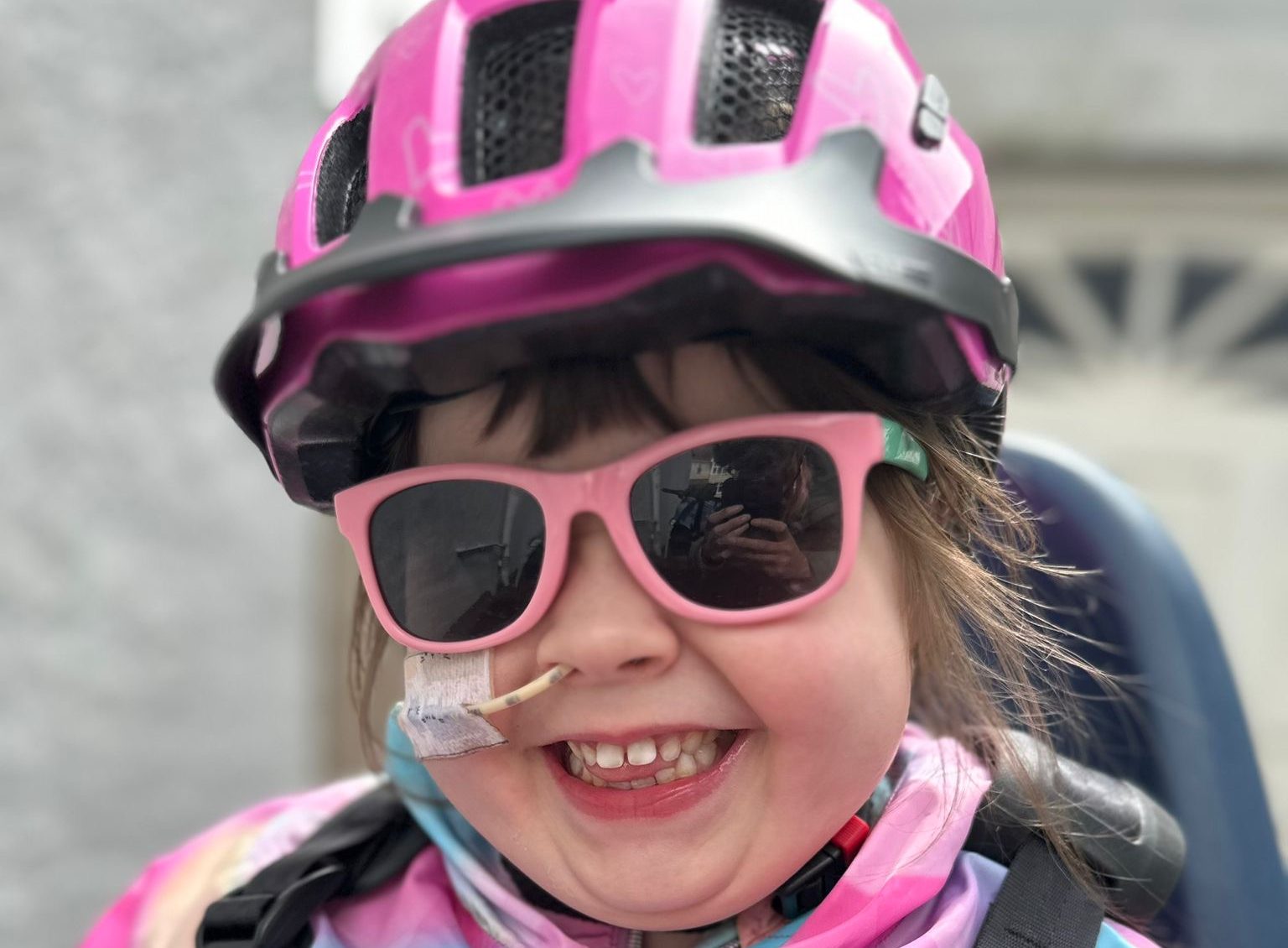
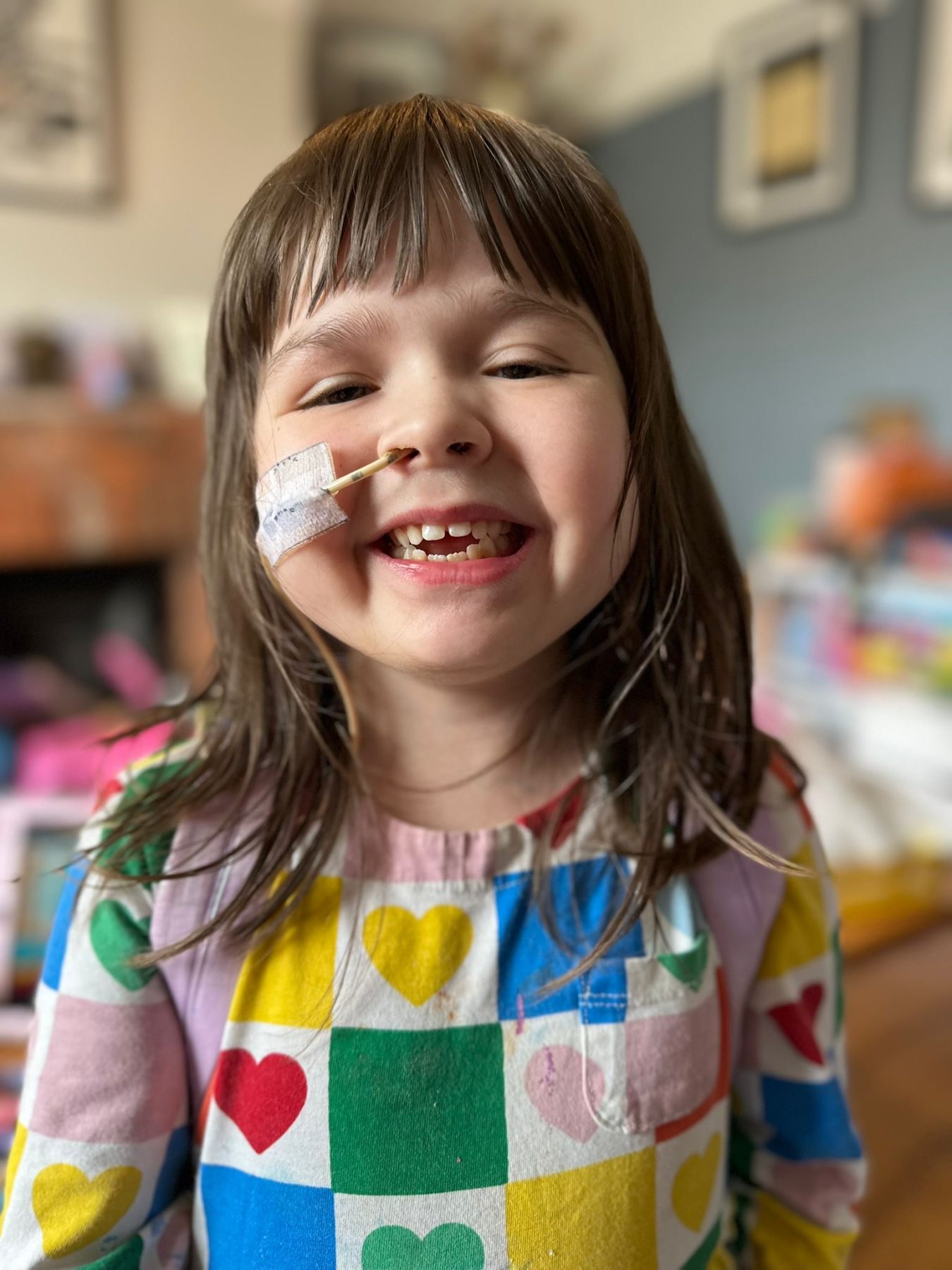
When you meet five‑year‑old Micky, the first thing you notice is her spark. She’s confident, sociable, and full of life – a little girl who greets the world with a smile that feels far bigger than she is.
But behind that smile is a story of extraordinary resilience.
A Diagnosis That Changed Everything
Micky was just 22 months old when her parents heard the words no family ever imagines they’ll face: a diagnosis of hepatoblastoma, a rare form of liver cancer.
“It all happened over just a few weeks,” her mum Liz explained. “She started going off her food and had temperatures on and off – nothing that felt unusual for her age. But then one day she complained of tummy pain, and her tummy looked a bit swollen. She was tired, she’d lost a bit of weight… and then one morning she couldn’t sit up. I just knew something was wrong.”
After several attempts to get answers, an X‑ray finally revealed a large mass in her abdomen. From that moment, life changed overnight.
Micky then began chemotherapy in Bristol. But as the months went on, doctors discovered the cancer had spread through her vascular system. A standard liver transplant wouldn’t be enough.
She was placed on the waiting list for a multivisceral transplant – a rare and complex procedure involving multiple organs.
“You can’t imagine getting through something like that when you’re in it,” Liz said. “But somehow you do.”
Six months later, the call came. A donor match had been found.
At Birmingham Children’s Hospital, in August 2023, specialists transplanted four organs – her liver, small bowel, pancreas, and stomach.
“I didn’t even know this was possible”, Liz said. “But the team in Birmingham were amazing.
The transplant was a success, but the months that followed were some of the hardest, with Micky having to spend around a year and a half in isolation.
Micky developed severe graft‑versus‑host disease, rejection of the liver and bowel, multiple bouts of sepsis, and other serious complications. She spent eight months in hospital and a further eight months in isolation at home.
“She’s so sociable, so outgoing – I don’t know how she got through all of that,” Liz said admirably. “But she did. She just grabbed life by the horns.”
Slowly, Micky grew stronger. She learned to walk again. She started nursery. She began to eat socially with other children. And earlier this year, she had her stoma reversed – a huge milestone in her recovery.
“Things are looking really positive for Micky,” Liz said. “She’s becoming more free.”
Starting School…
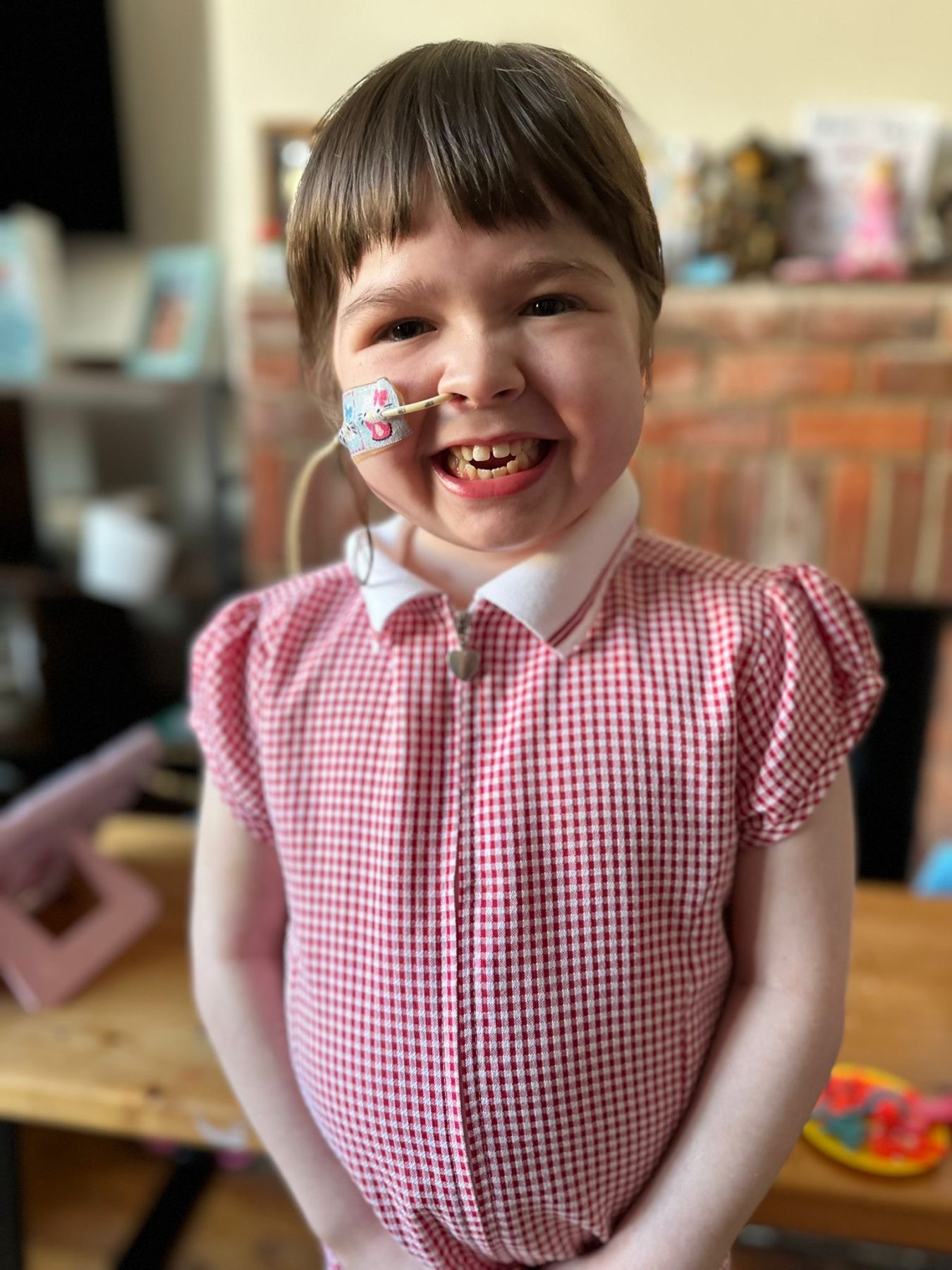
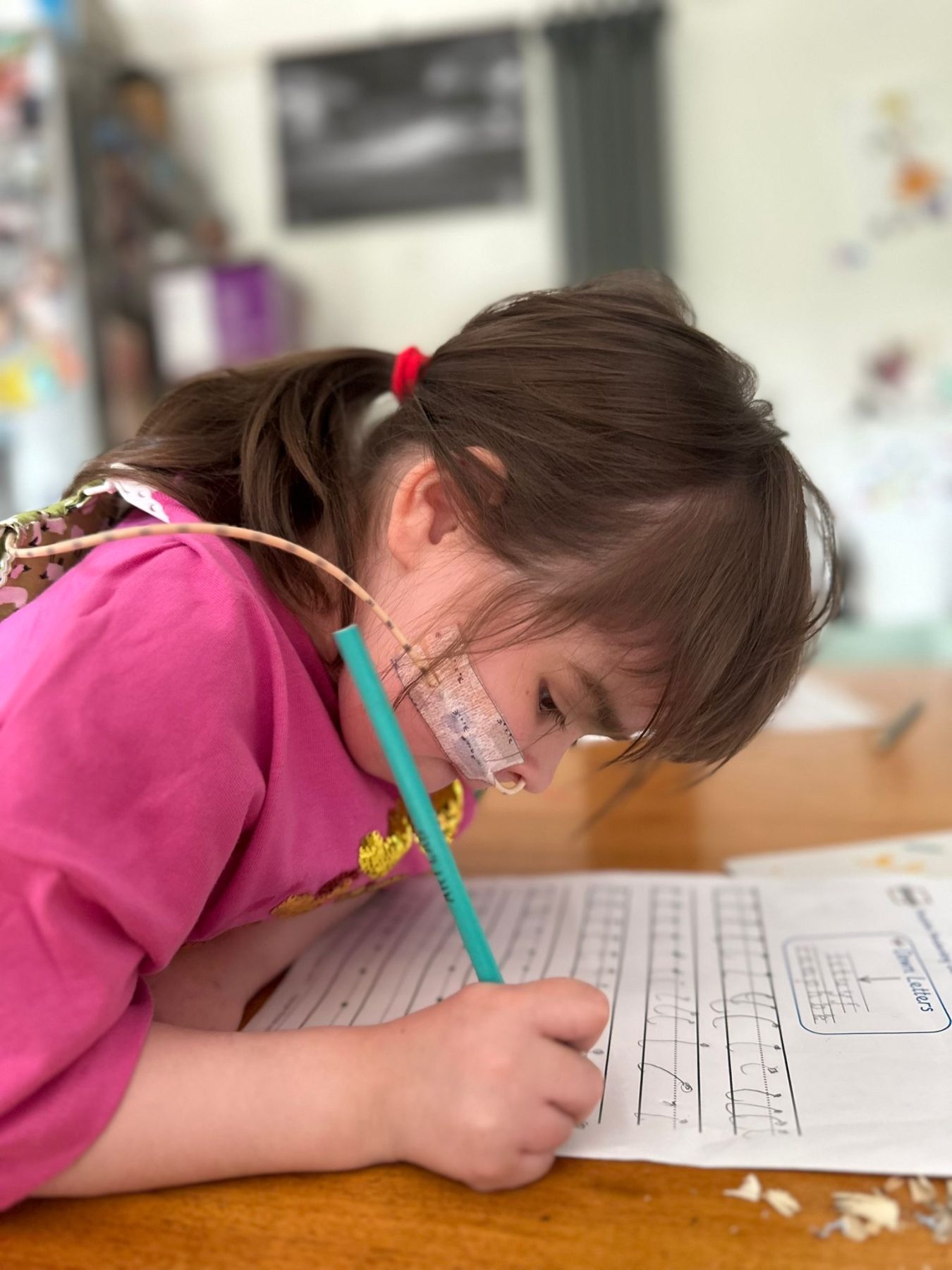
Choosing a school was a big decision. Micky’s family wanted somewhere that could offer the right support and environment for her needs.
They found exactly that in a small, fully accessible school in Westbury Village with an excellent SEND (Special Educational Needs and Disabilities) coordinator.
“It’s further away, but absolutely the right place for her,” Liz explained. “There’s an amazing SEND coordinator there, who is so knowledgeable and supportive. They’ve gone the extra mile for Micky.”
Getting there, however, wasn’t simple. Micky’s mum doesn’t drive, and there’s no bus route. For months she pushed Micky in a buggy for 25 minutes each way – one way uphill.
“She’s getting older and more conscious of being the only one in a pushchair,” Liz said. “We needed another option.”
The Cargo Bike
That option came through Jessie May’s previous Family Liaison Officer, Sam.
“I didn’t have the brain capacity to chase anything up,” Liz admitted. “Sam was amazing. She just said, ‘Let me see what I can do.’”
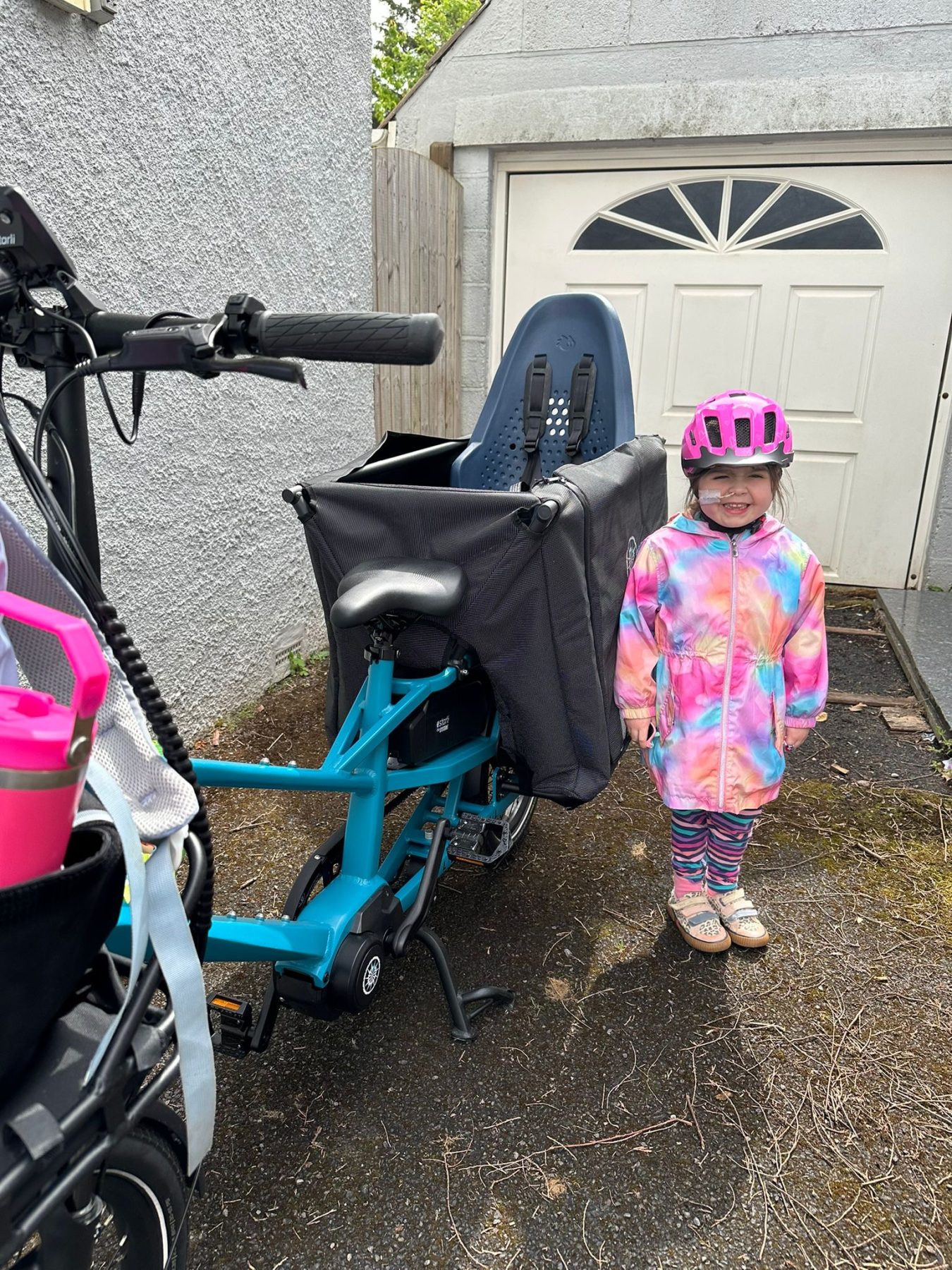
Sam contacted the council, who approved funding for an electric cargo bike. The bike shop even fast‑tracked the build after hearing Micky’s story.
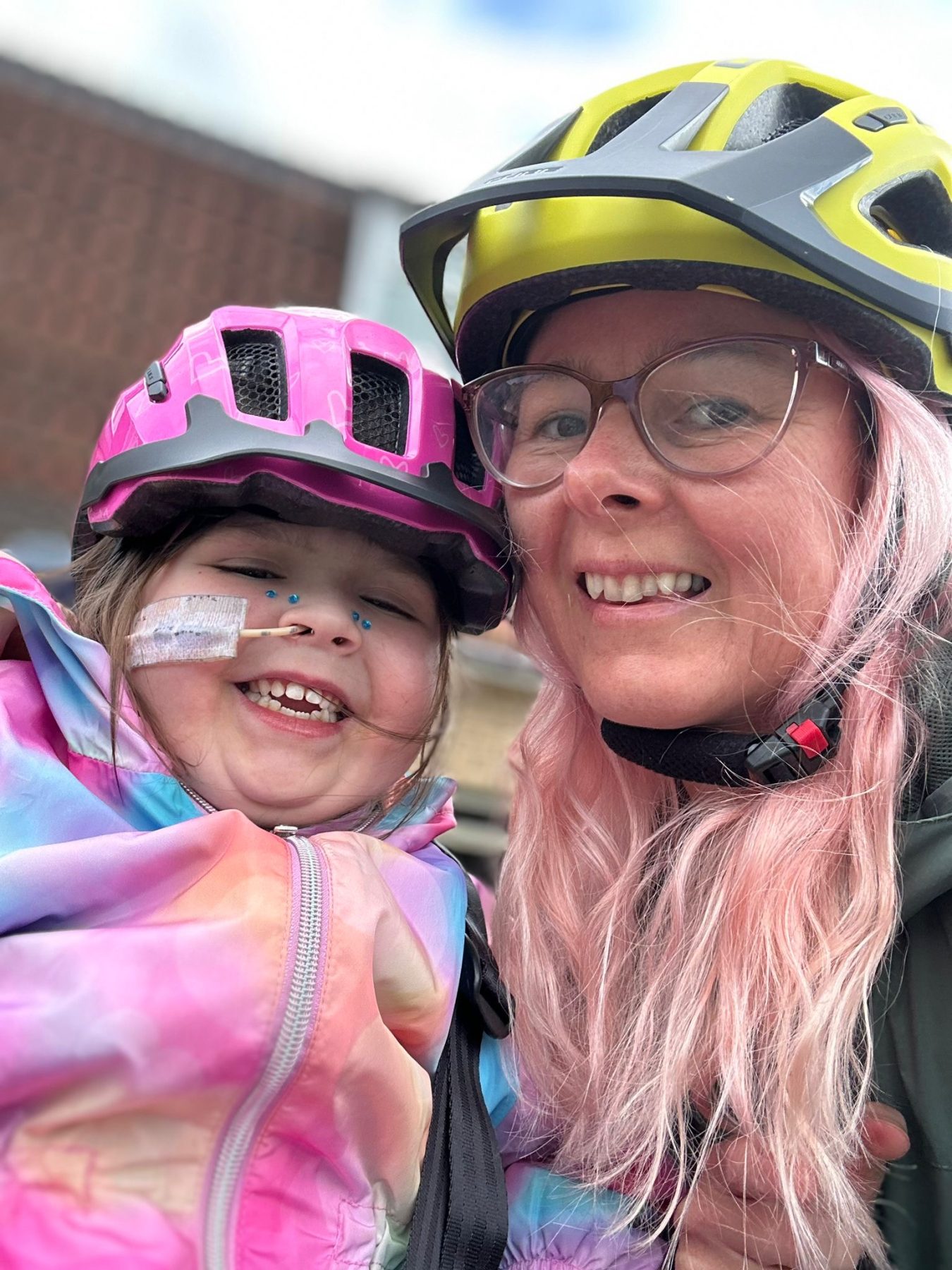
“The kindness has given us such a boost,” Liz said. “It got us out of a rut. And Micky loves it, and her pink bike helmet!”
It has been a very positive change to their daily routine, especially now that the weather is improving, and means the journey to school is much easier for them.
Life at Home With the Jessie May Nurses
When the family returned from Birmingham, Jessie May nurses became part of their weekly rhythm.
“It was the first time we’d handed over some responsibility,” Liz said. “We’d been so used to knowing every moment of her day.”
But slowly, trust grew.
“It was a really big moment when Micky started playing in the garden with Jessie May nurses, Ash and Gemma, while I was inside. She’d been so attached to me for so long, so watching her feel safe enough to do that meant a lot.”
Now, Micky looks forward to seeing the nurses. They give her parents breathing space, reassurance, and someone who truly understands.
“Everyone at Jessie May who’s been in Micky’s life, has helped shape the confident, happy girl she is now,” Liz said. “They’ve looked after her with such integrity and love. You can feel that they genuinely care.”
Why Accessibility Matters…
Like many families caring for a medically complex child, Micky’s parents, Liz and Jim, have had to navigate a maze of accessibility challenges at home – all while juggling hospital stays, treatments, and the emotional weight of uncertainty.
For Micky, even everyday environments can carry risks. She has broken her leg twice: once in the park, and once on the small steps leading from their garden into the house.
“Her bones are a little more hollow and brittle because of the immobility and the chemo, and due to high dose steroids when she was acutely unwell.” Liz explained. “She was just learning to walk again, and you’re in that stage of hovering over her, trying to keep her safe but also give her the freedom to take those steps – literally and figuratively.”
The council stepped in to help. They installed railings on the garden steps and adapted the back door, replacing the step with a slope so the buggy could be pushed in and out safely. They also fitted new doors and added a rail up the stairs, helping Micky relearn how to climb them with support.
“She couldn’t do stairs for a long time,” Liz said. “Now she can, as long as someone stands behind her. It’s a big milestone.”
Inside the home, physiotherapy teams provided further support – a commode for when she didn’t have the strength to reach the toilet, and equipment to help with bathing and lifting.
“She just didn’t have the core strength,” Liz said. “Now that her stoma has been reversed, things are improving, but it’s been a long journey.”
For families like Micky’s, these adaptations aren’t just practical fixes – they’re what make everyday life safer, more manageable, and a little less overwhelming during an already exhausting time. We wanted to include this section to raise awareness of the support that is available, because so many families simply aren’t told what they can access or how to start the process. As Liz said,
“You’re overwhelmed with everything else you’ve got going on. You don’t always know what help is out there, or where to begin.”
That’s also why the family support at Jessie May has been so crucial for them. Without someone to guide them, they wouldn’t have known what to apply for – or had the headspace to navigate it all on their own.
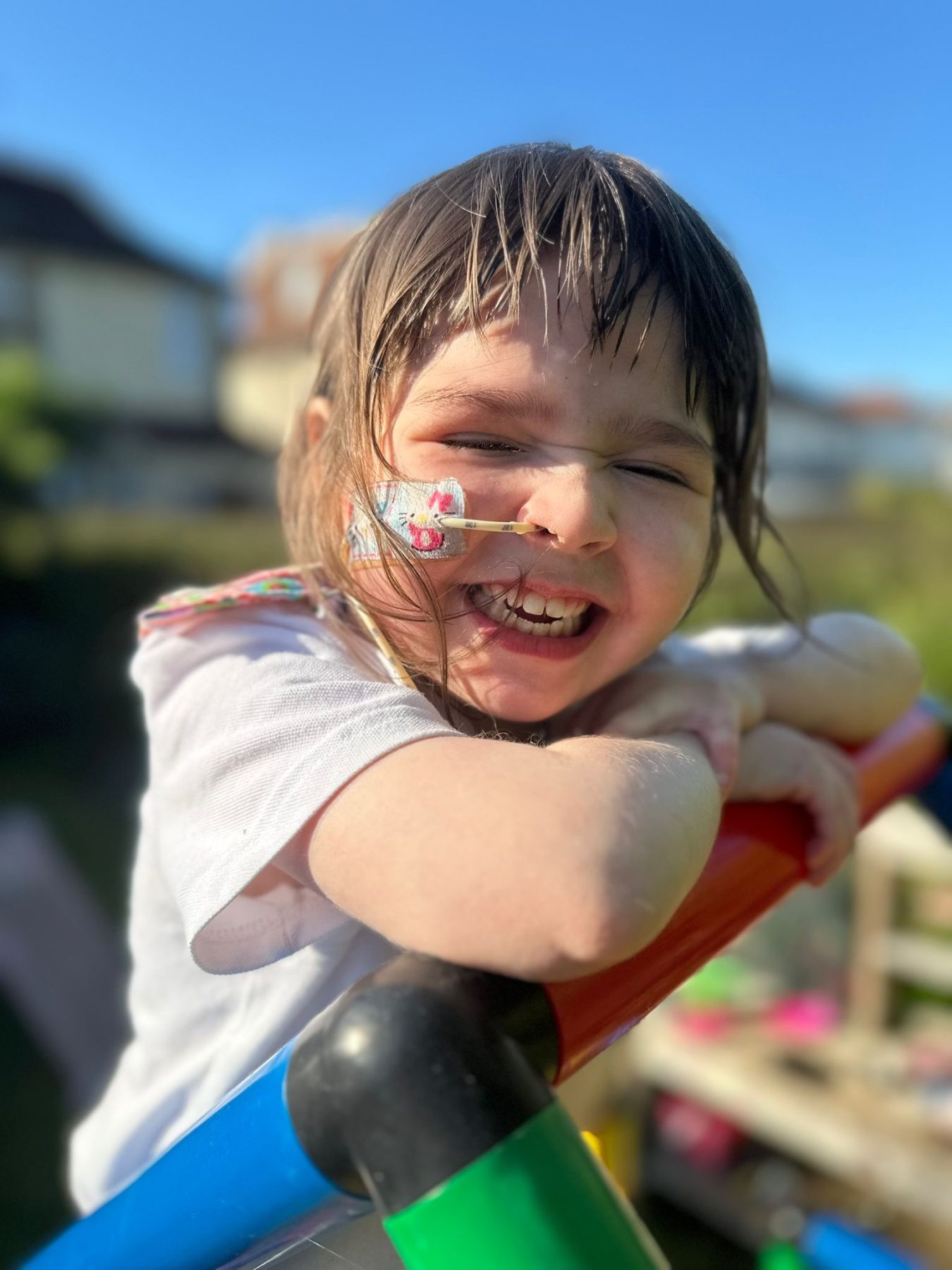
Today, Micky is thriving. She loves school. She loves her bike. She loves being out in the world after so long spent inside.
“She’s a miracle,” her mum said. “To go through everything she has and still have such joy… it’s incredible.”
And for her parents, the small moments matter most.
“It’s the little acts of kindness that get you through,” her mum said. “The people who show up. The ones who help you breathe. Jessie May has been a huge part of that for us.”