
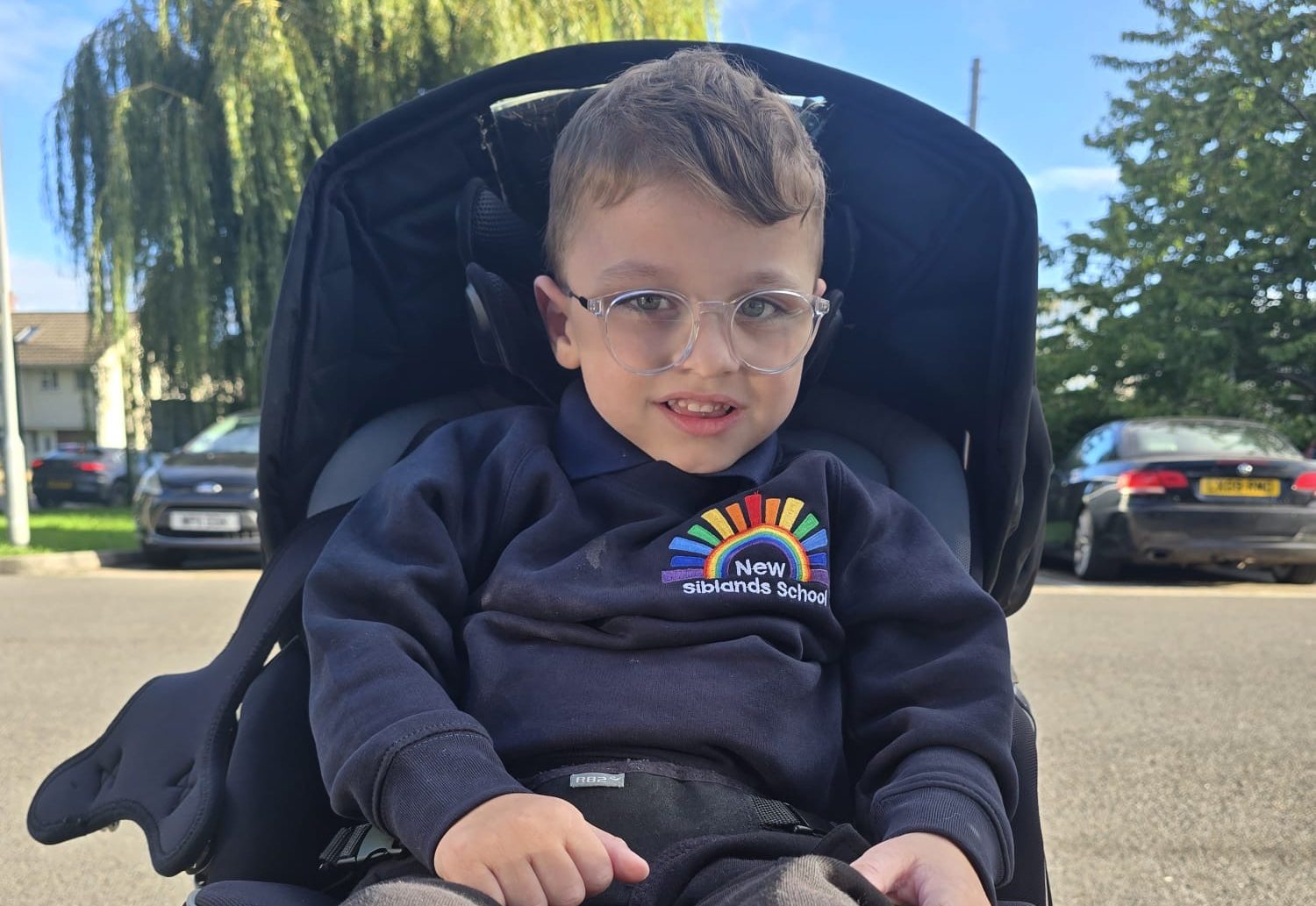
Otis was born at 29(+5) weeks, arriving in the middle of the COVID pandemic after a traumatic emergency delivery. Taylor remembers the moment vividly: “I was taken in for a c‑section and then he was taken away. It was horrendous.” When she later tested positive for COVID, she wasn’t allowed to see her newborn son for nearly a week. “My partner got to go in and see him when he could,” she said, “but I wasn’t actually allowed to see Otis.”
In NICU, the news became even harder. Scans showed extensive brain damage, and Taylor was told that no one knew what the future might hold. “On one side of his brain, Otis had a significant bleed; on the other, cysts where brain matter hadn’t formed.” He later developed CVI, a visual impairment caused by damaged pathways between the eyes and brain. “Sometimes they can work, sometimes they don’t,” she explained.
Feeding quickly became a daily struggle. “He was the sickest baby you can imagine – he just threw up everything.” Eventually, Otis needed a PEG fitted because he simply wasn’t gaining weight.
As Otis grew, more challenges appeared: seizures, dystonia, spasticity, pain, and the complexities of cerebral palsy. Taylor describes one seizure as feeling like “his bones disappeared – he would just go limp and floppy.” His dystonia causes his whole body to spasm, leaving him exhausted.
Throughout all of this, Taylor and her partner Kieran found themselves constantly fighting to be heard. “I’ve never battled something so hard in my life just for my son to be heard through me.” Every appointment meant starting from the beginning, retelling their story again and again. “It’s so complex, there’s so much to him.”
Becoming a Parent Carer Overnight
Although Taylor had spent seven years working as a professional carer, supporting elderly people in their homes, nothing prepared her for becoming a parent carer overnight. The shift was immediate and overwhelming.
“It is completely different… when you’re working for someone, the rules are already set. The expectations are written. Where, for me, I actually really struggle with setting that guide.”
Despite her experience, Taylor found herself doubting everything. “I feel like I’m never doing it right, like he’s missing something I’m not quite giving him.” People often assumed her background would make things easier, but she says it had the opposite effect: “It’s pushed my expectations of myself through the roof.”
Because Otis is non‑verbal, Taylor and Kieran have had to learn his cues and body language, watching closely for signs of discomfort or pain. “We have to learn his body language which can be really hard especially if you think he might be in pain.”
The emotional weight of caring for your own child is something Taylor struggles to put into words.
“Physically, I’d take it ten times over – the mental load is the part that’s really a lot to deal with.” Alongside that sits a quiet, constant grief: “You’re grieving the child he could have been.”
The Impact on the Whole Family
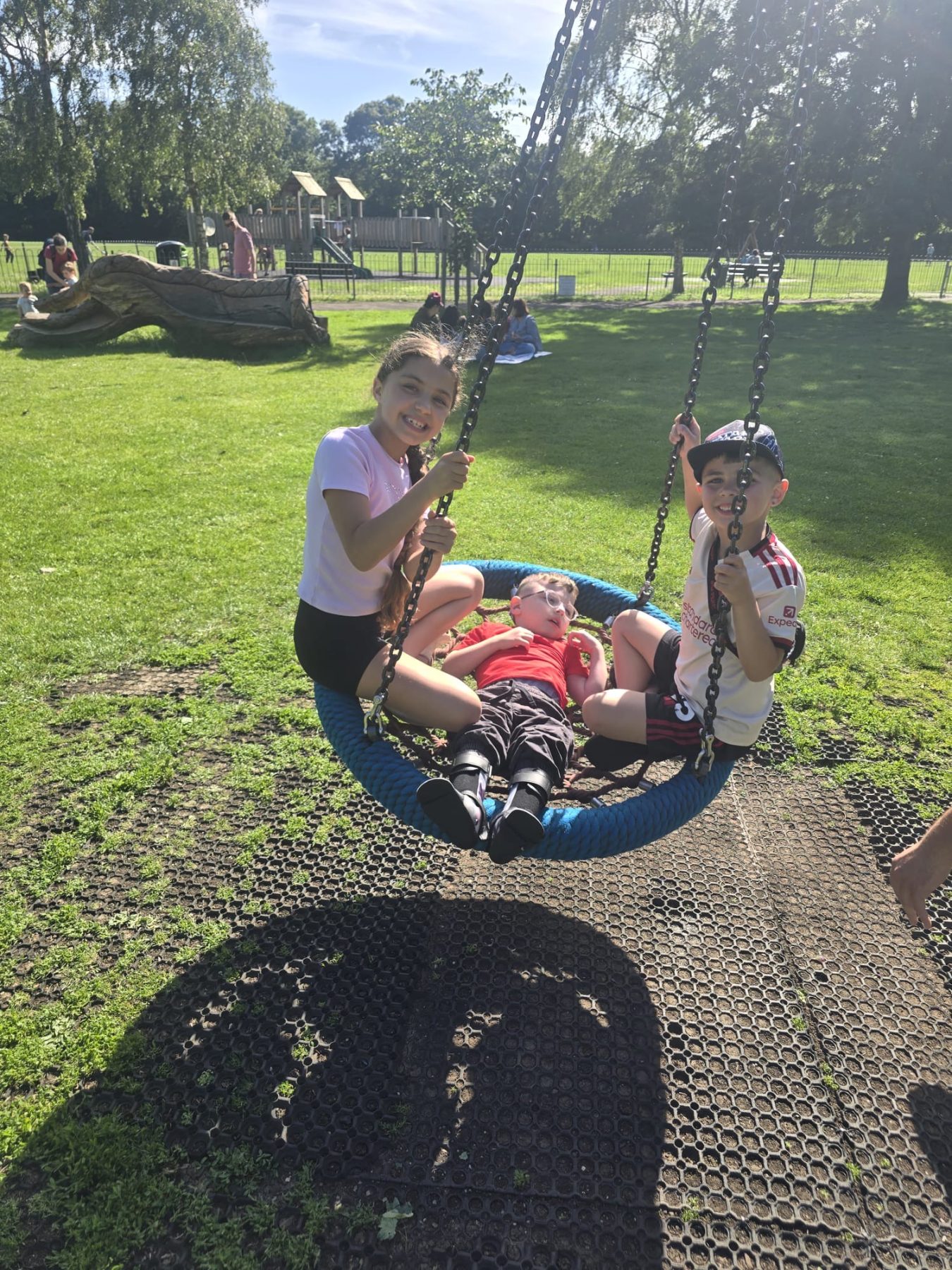
Otis’s siblings, Aiyla (8) and Arlo (5), have grown up around hospital appointments, medical equipment and exhaustion. Taylor remembers how often they were pulled from place to place so their parents could be at appointments. “They were physically pushed aside… pulled from pillar to post.”
What they wanted was simple: time with mum and dad. “And we couldn’t give that to them.”
Everything changed when Jessie May arrived.
Finding Jessie May
Before Jessie May, Taylor tried every route she could think of – Portage, early help, social services – but each door seemed to close. “Everyone goes, ‘Oh, you should ask for some help.’ And you do. And it gets literally thrown back in your face.” Otis repeatedly fell through the gaps: “He’s got a life‑limiting condition, yes, but he’s not life limited,” Taylor explains.
So when Jessie May came to assess the family, Taylor braced herself for another no. Instead, she felt something she hadn’t felt in years: “It was so nice to finally be heard.”
The nurses offered trust, reassurance and understanding – something the family had never had. “We don’t even have family members that we can leave Otis with, so the reassurance we got was just immense.”
Nurse Charlotte, who supports Otis and the family, says she has so much respect for the way Taylor manages caring both at home and in her carer role. “Taylor spends some evenings caring for others and then continues caring through the day and the night for Otis. She keeps going, even on the really hard days, and the way she advocates for him is remarkable. It’s a privilege to work alongside her.” Her words reflect what many at Jessie May see – a mum doing everything she can to support her child while carrying a significant amount on her shoulders.
With Jessie May’s support, Taylor and Kieran can spend precious time with Aiyla and Arlo. “Even if it’s only three hours once a month, it’s still something.” They can take them out, go to the cinema, and step back into the role of mum and dad. “We can almost come out of carer role, become mum and dad to the two other children that need us just as much.”
Taylor says the difference is profound. “There’s a big difference between Taylor the carer for Otis and Taylor the parent – we don’t feel like parents to Otis a lot of the time. We definitely just feel like carers, which is a sad reality.”
What Taylor Wishes People Understood
For Taylor, one of the hardest parts of caring is the emotional isolation. “Trying to find somebody that is in a similar situation to us basically isn’t possible; it’s really difficult within this disability world because no two children with a disability are the same.”
She longs for connection, but comparison often makes things harder. “I find myself coming away thinking, I didn’t have the right to complain about my day when they’ve got it way worse.”
And above everything else, there is exhaustion. “Exhaustion is probably the top one – the mental load of it is just a lot.”
Her Advice to Other Carers
Taylor’s advice is honest and raw:
“Be prepared… prepared for fights. Everything that you want and need. You need to be able to advocate and shout from the rooftops.”
“Research is key… find people like Jessie May that can point you in the right direction.”
And most importantly:
“Take whatever support you can, grab it with both hands. Even if you don’t think it’s for you, you just don’t know what else is out there.”
Otis Today
Otis is now four and thriving at his specialist school. He has hydrotherapy, physio, trampoline therapy, and a teacher who understands him deeply. He is expressive, determined and full of personality. “He’s such a happy little boy.”
He communicates in his own way – dropping something on the floor if he doesn’t want it, or pulling himself across the floor to the back door when he wants to go outside. Taylor smiles when she talks about him: “He is very strong, very determined.”

Raising Awareness This Carers Month
Taylor’s story is one of thousands. Behind every child with complex needs is a family carrying an extraordinary load – often unseen, often unsupported, and often exhausted.
Parent carers are not “just coping.” They are coordinating care, managing appointments, fighting for services, and providing round‑the‑clock emotional and physical support. Support for carers isn’t a luxury – it’s essential.
This Carers Month, we’re asking people to:
- Recognise the invisible work carers do
- Listen when families say they’re struggling
- Advocate for better support, accessible services, and stronger support for carers
- Champion organisations like Jessie May that provide specialist nursing care and emotional support
No carer should feel alone, unheard or unsupported.