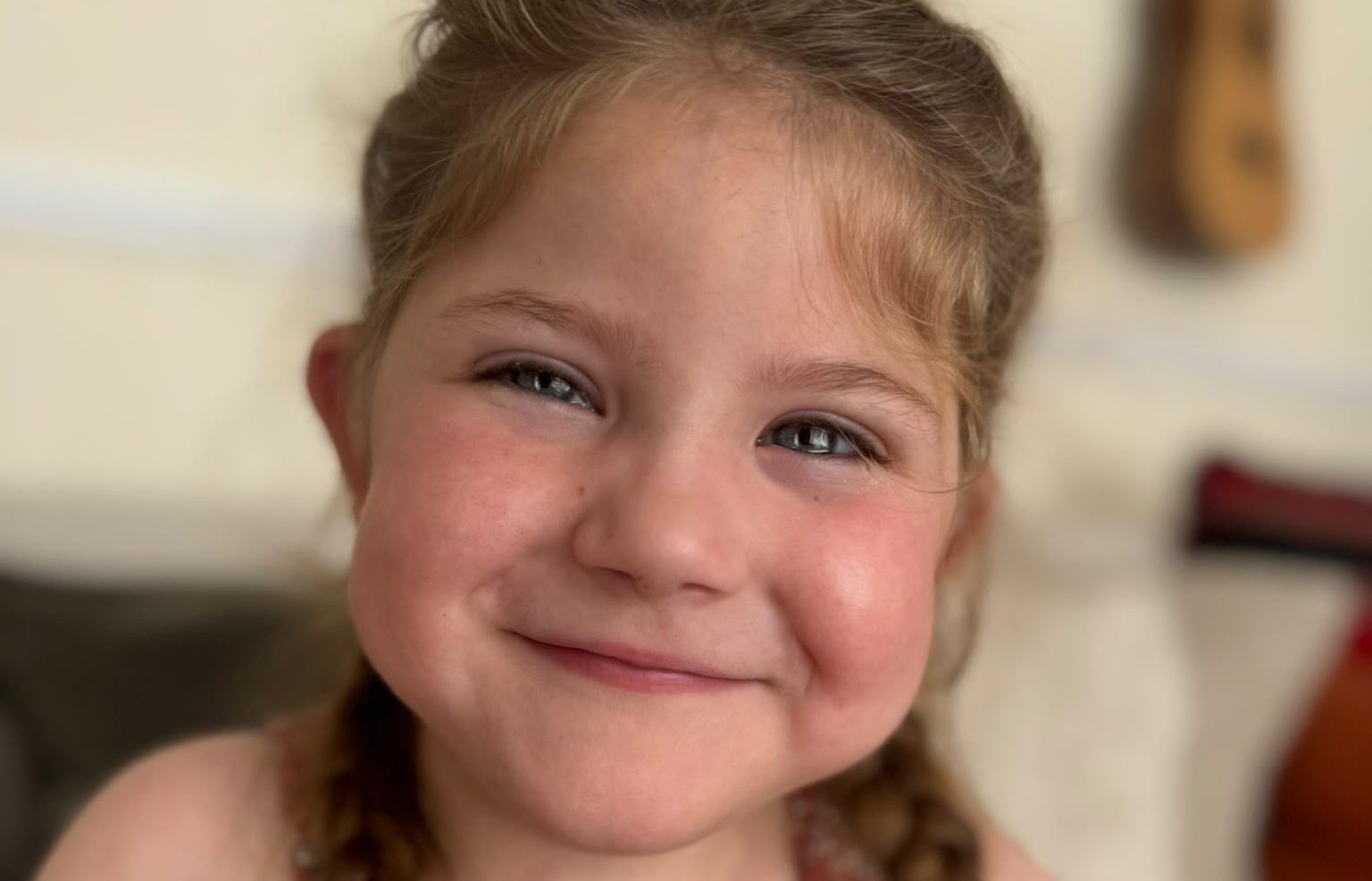
For Child Cancer Awareness Month, we’d like to raise awareness of the realities families face long after treatment ends. Effie’s story shines a light on the urgent need for children’s cancer support, and the ongoing challenges that come with surviving child cancer – challenges that many families navigate with little understanding or help.
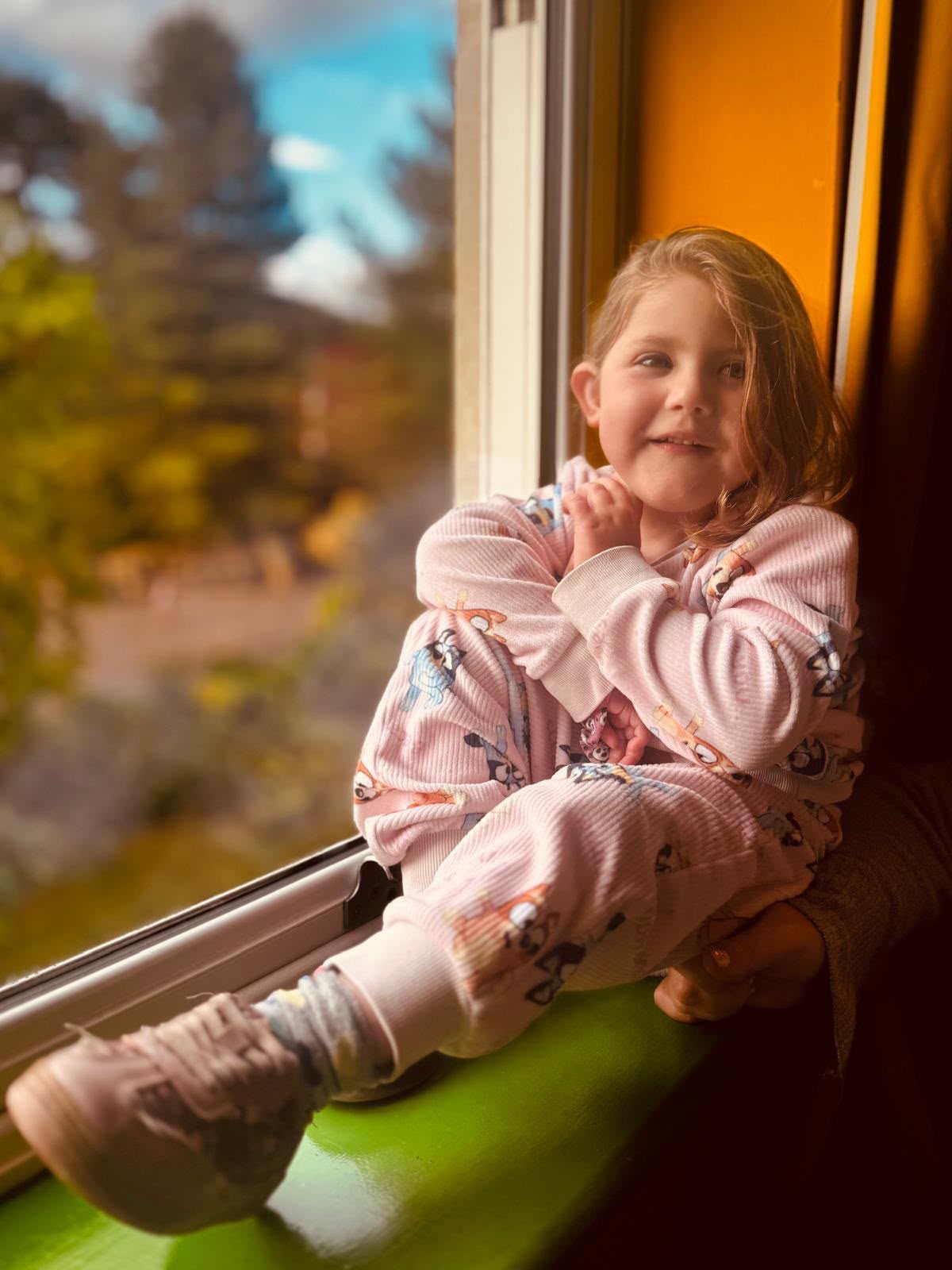
From the moment Effie was born, her parents, Rachel and Leighton, knew something wasn’t right, but they could never have imagined the journey ahead. Today, at four years old, Effie is a bright, sociable, hilarious little girl who has already survived more than most adults will face in a lifetime. Her story is one of extraordinary resilience, medical complexity, and the power of specialist hospice‑at‑home care.
A Long Fight for Answers
Effie is an IVF baby and was very much longed for; however, from almost the moment she was born, Rachel sensed something wasn’t right. Effie cried in pain, missed milestones, and struggled physically. Despite repeatedly seeking help, Rachel and her husband were dismissed as “over‑anxious new parents.”
Everything changed when Effie was five months old.
“Her right arm went completely limp – you’d pick it up and it would just fall like a rag doll,” Rachel explained.
After months of pushing for answers, an MRI finally revealed the truth: a five‑centimetre tumour growing inside Effie’s spinal cord, crushing it and blocking spinal fluid. The pain she had been experiencing was unimaginable.
“We were told to enjoy her – that she probably wouldn’t survive.”
The initial prognosis was devastating. Doctors feared the tumour was too aggressive, too entwined in her spinal cord, and too dangerous to operate on. Rachel recalls being told to simply enjoy the time they had left.
But a twist of fate changed everything.
When the local surgical team became unavailable due to COVID, Effie was transferred to Southampton where a different surgeon offered something the family desperately needed: hope.
“He said, ‘My aim is to have you dancing at her wedding.’ We needed that hope,” Rachel said.
The first surgery was to reduce the pressure in her spinal cord, as she was at imminent risk of a spinal stroke. They removed part of her spine, like undoing a zip, and added a tissue graft to open up the spinal cord. This is when they took the tumour biopsy, which showed that the cancer was highly aggressive. She then had to go back 10 days later to have the tumour removed.
The surgery lasted ten hours. Against all odds, the surgeon believed he had removed the entire tumour.
“He literally performed a miracle – he said, ‘I think I’ve got it all.’ We couldn’t believe it.”
Effie survived, but her journey was far from over.
Effie underwent 11 months of adult‑strength chemotherapy, despite being just a baby. The treatment nearly killed her several times. She spent time in resus after a nasal bleed turned life‑threatening due to her nonexistent neutrophils.
She eventually rang the bell, but cancer was only one part of her story.
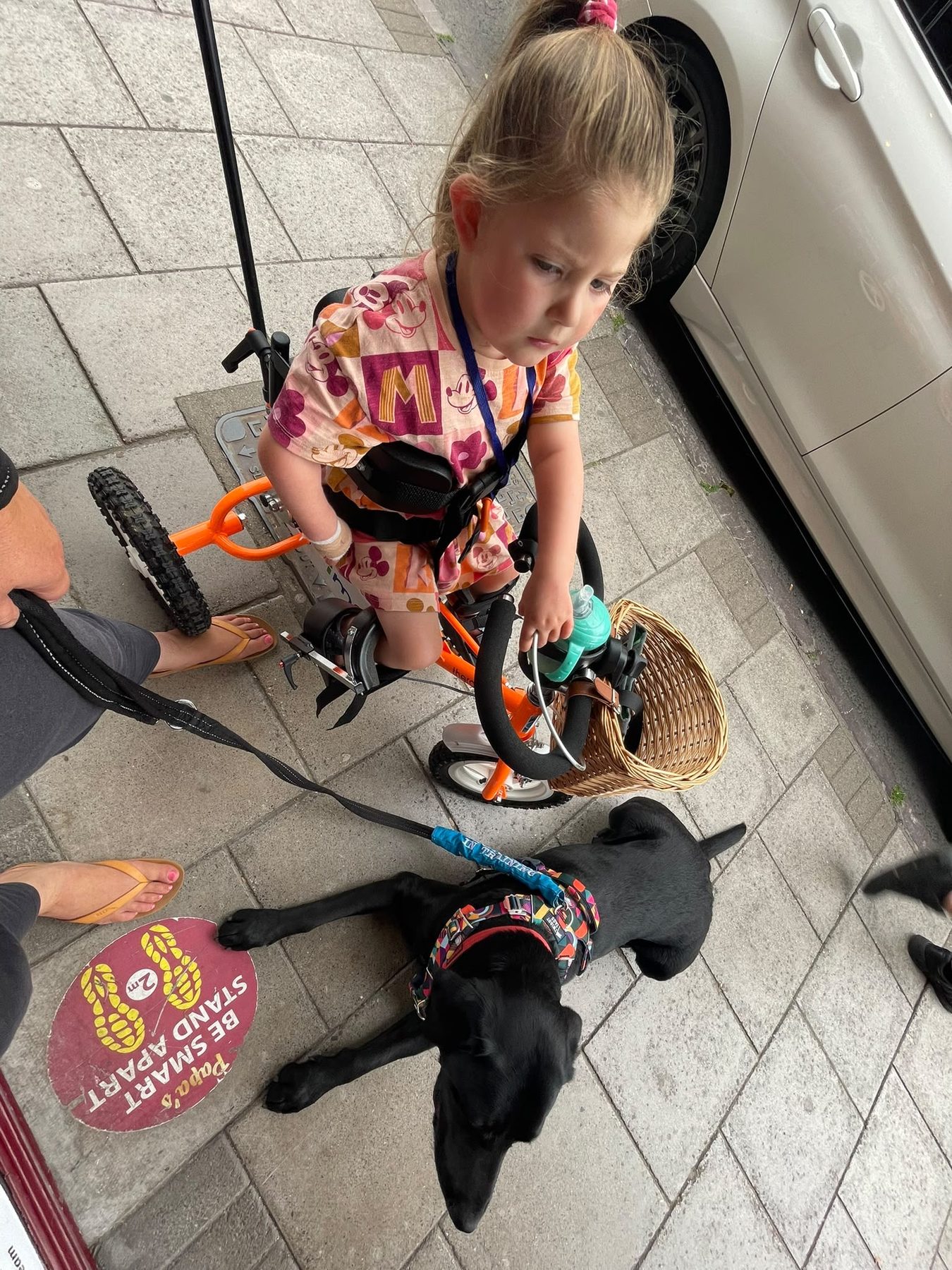
The tumour and surgery left Effie with incomplete quadriplegia. All four limbs are affected, and she now uses a wheelchair, standing frame, walker, splints, and a corset. She cannot walk, cannot grip to support transfers, and requires full assistance for all personal care.
Further genetic testing revealed something even more shocking:
“She’s got a chromosome anomaly so catastrophic they said it’s not compatible with life,” Rachel shared.
Yet Effie is here, defying every expectation.
Daily Life for Effie
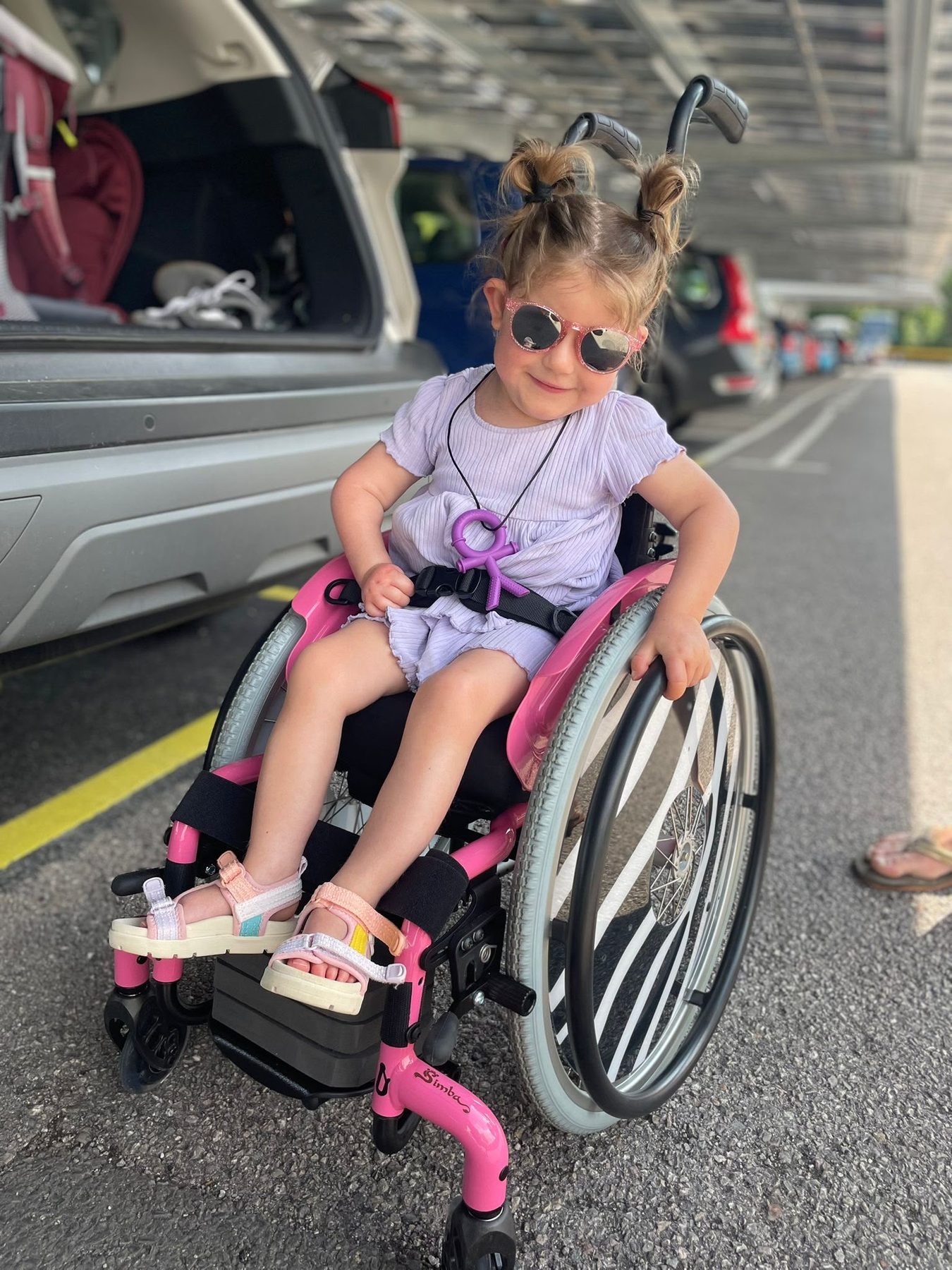
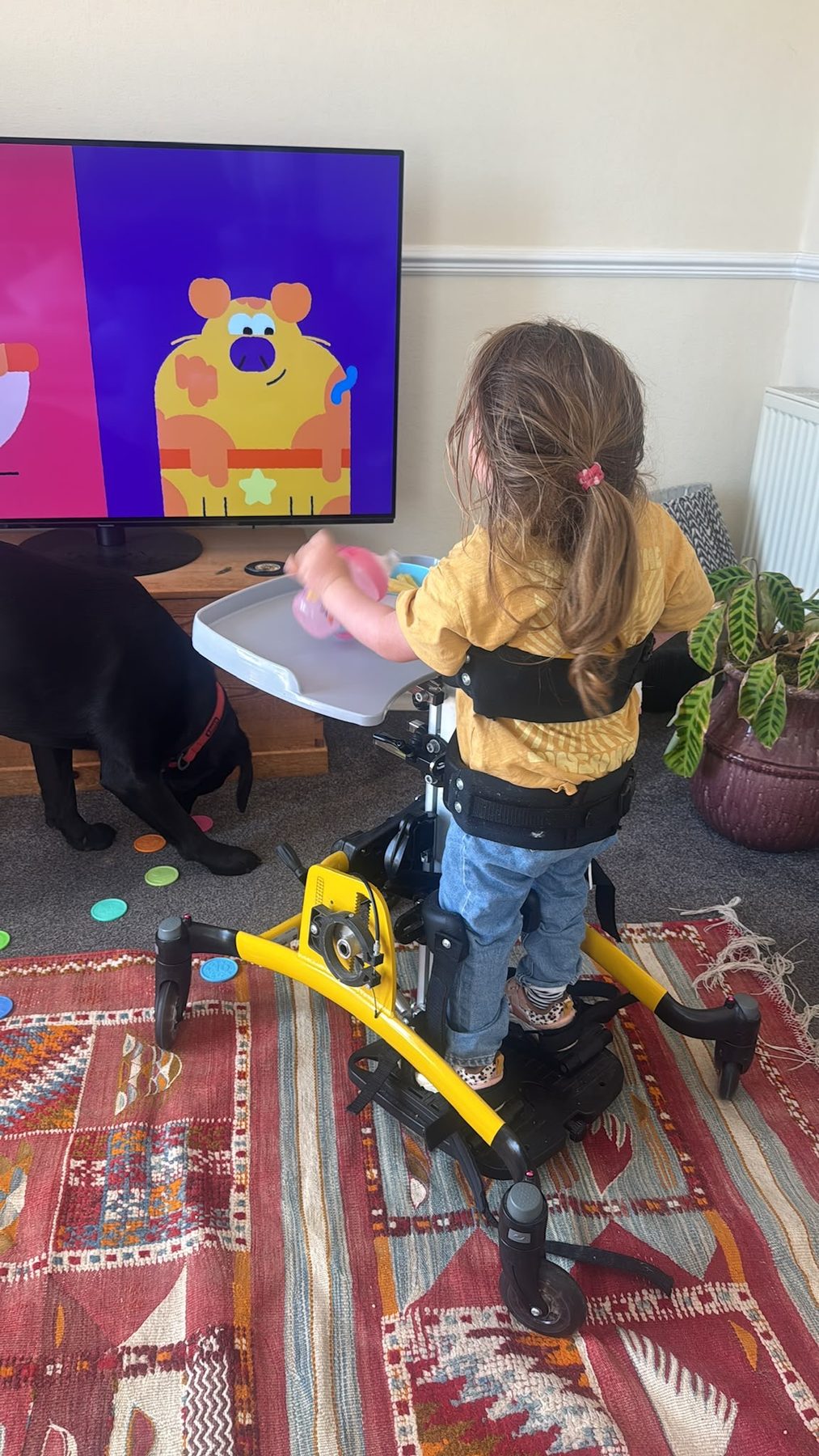
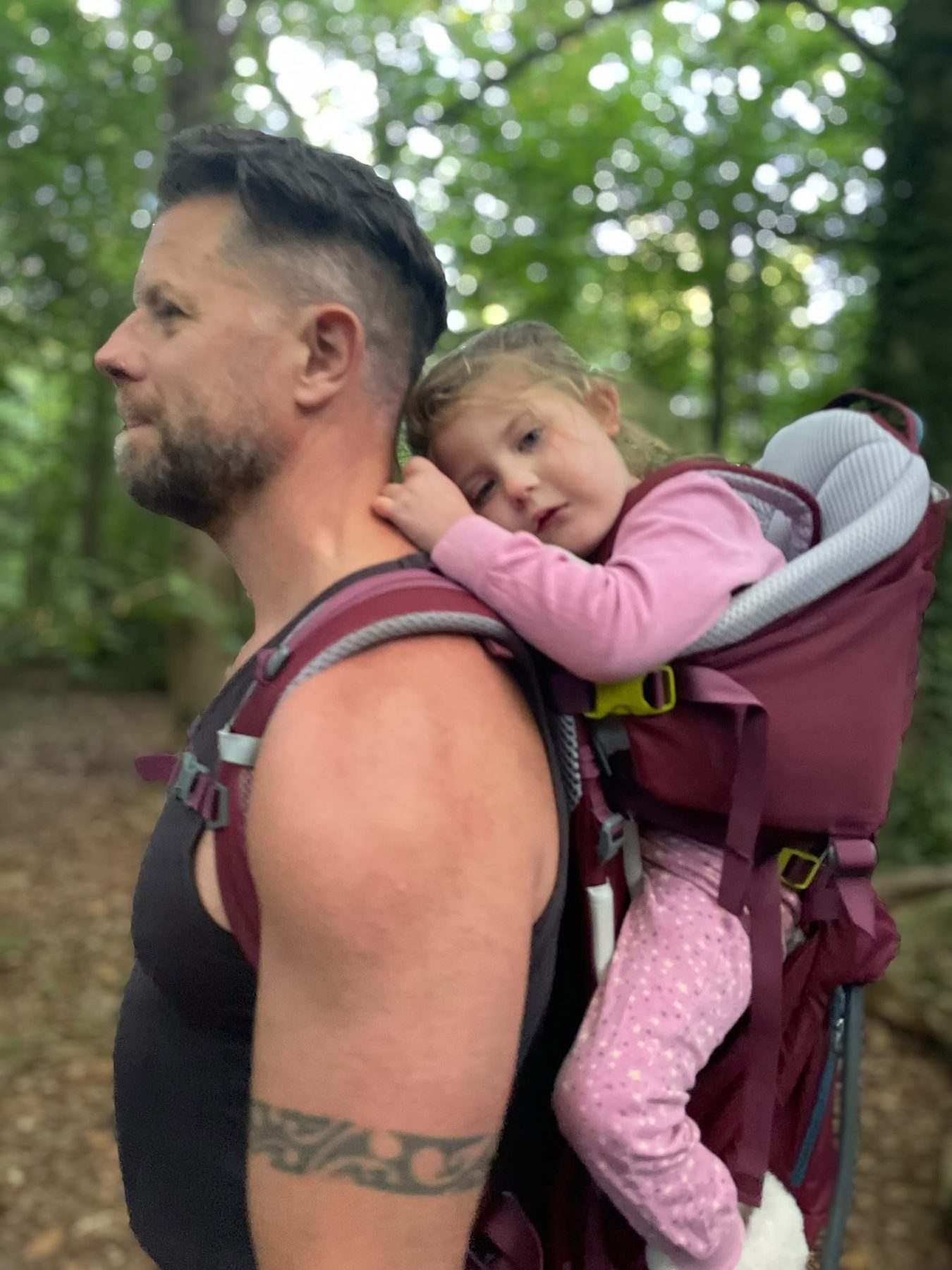
Effie’s care needs are constant and intensive:
- Full assistance with washing, dressing, and toileting
- Help with feeding and constant prompting due to disrupted hunger signals
- Support with all mobility and equipment
- Adult support for play and learning
- Regular hospital appointments and MRI scans under anaesthetic
- Monitoring of a residual tumour shadow that may or may not be cancer
Rachel describes daily life as:
“Relentless… we live in heightened anxiety because we’re used to bad news after bad news. For once, it would be nice to look to the future and see light and happiness, rather than fear.”
Yet Effie remains happy, sociable, and full of personality.
“She’s hilarious,” Rachel says with a smile. “She tries to make people laugh. She craves feedback from people too. It really makes you realise how much of our communication comes from non-verbal cues.”
Recently, Effie began attending a specialist school designed to meet her complex needs – with sensory rooms, hydrotherapy, rebound therapy, and a highly trained team who understand her completely.
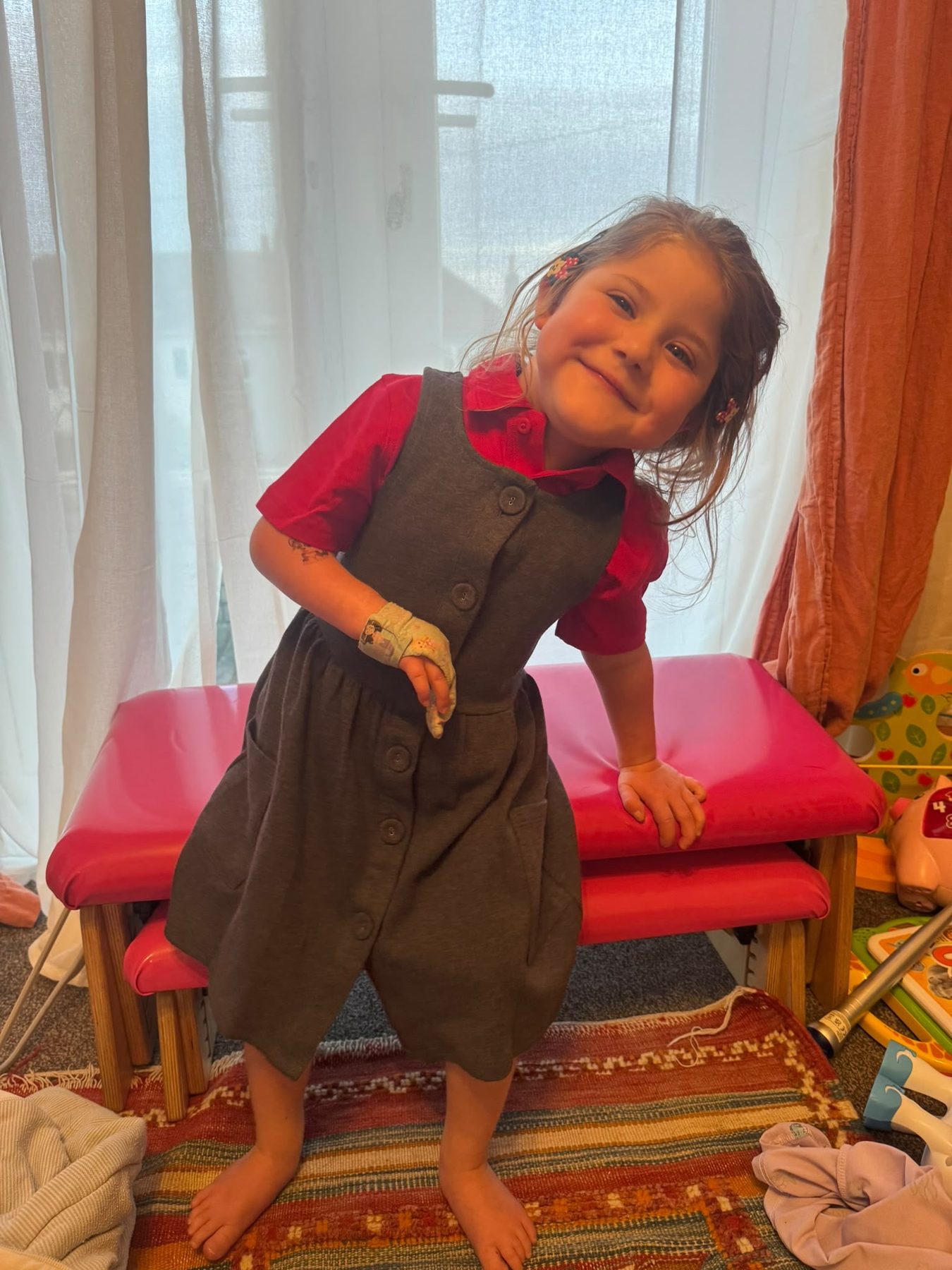
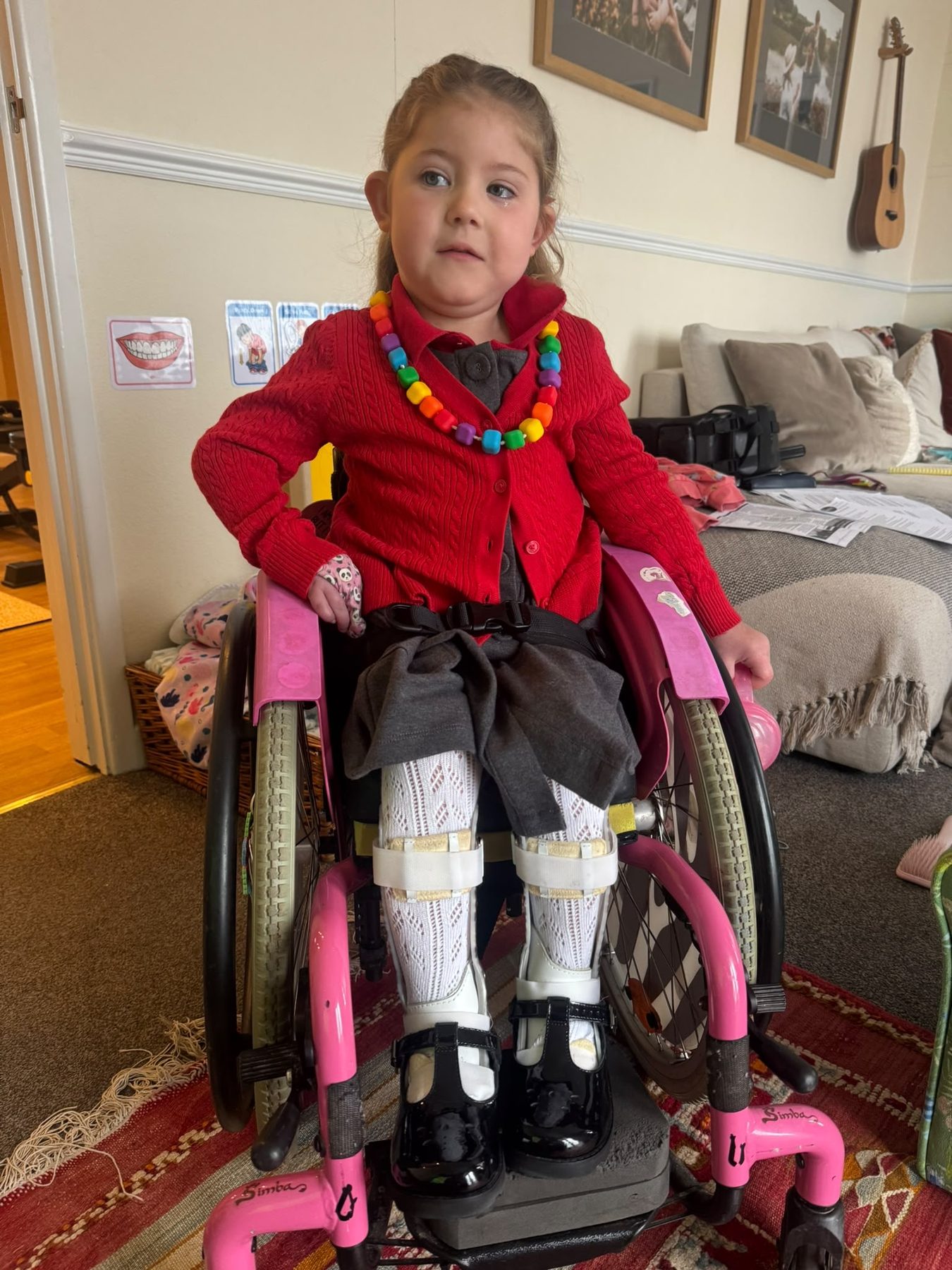
“She had no apprehension at all. It was like she’d been there for years,” Rachel said.
Despite being non‑verbal, Effie communicates beautifully through her facial expressions, eye pointing, and her signature frown – a language her family knows instinctively, and one her teachers and Jessie May nurses are very familiar with now too.
When Jessie May stepped in…
Despite Effie’s complex needs, Rachel had to fight to access hospice‑at‑home support.
“We were told she didn’t qualify, but we were begging for help.”
A neuro‑oncology nurse finally intervened, and Jessie May stepped in.
“It’s been a breath of fresh air… someone validating our struggles. Not just offering respite, but sitting with us in it – understanding Effie, understanding us, and taking a weight off our minds that we didn’t even realise we were carrying.”
For Rachel, the impact has been profound.
“It’s so hard to trust people to look after your child, but knowing they get it, that they’re qualified – it’s a godsend.”
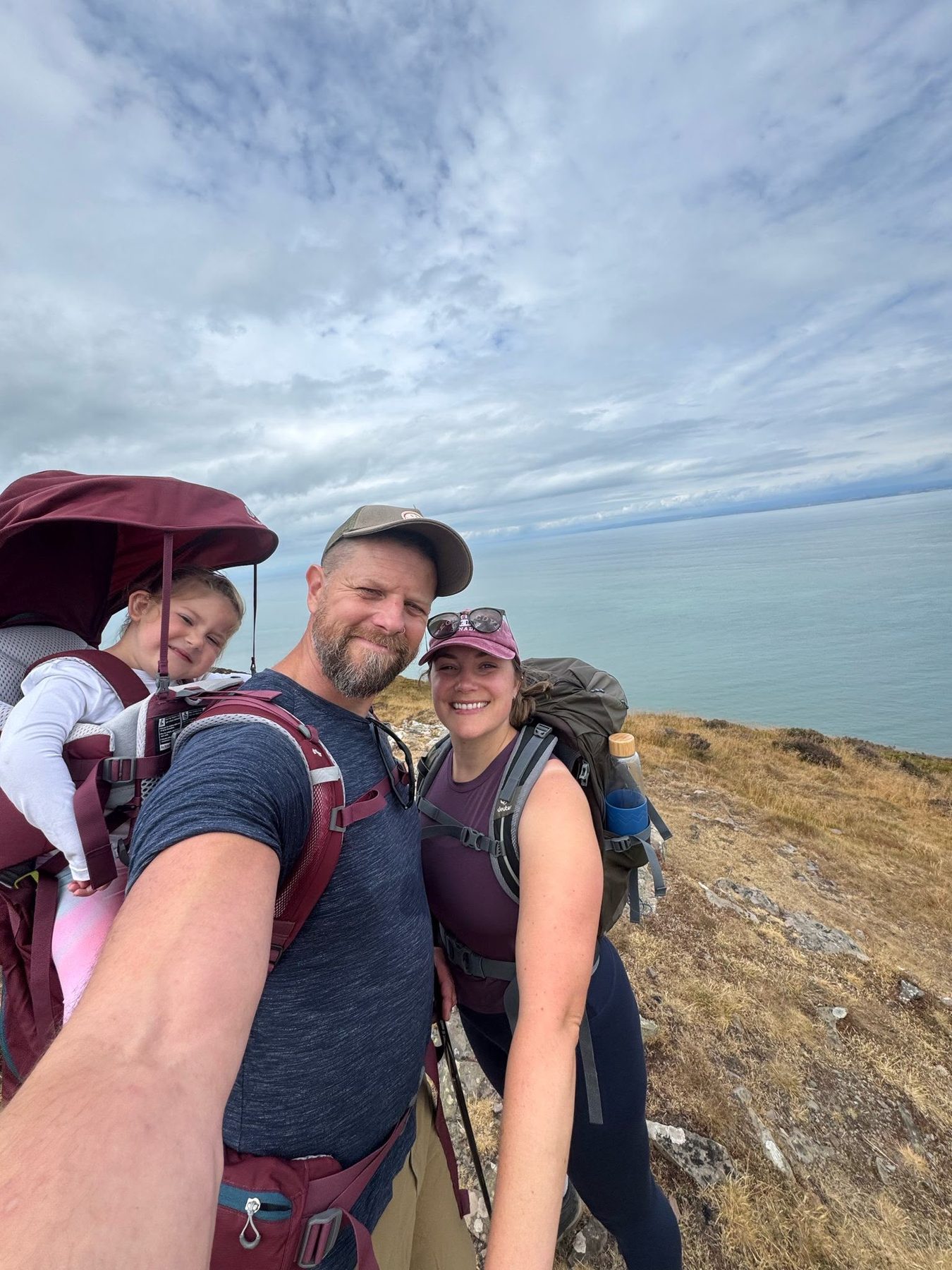
Jessie May’s visits allow Rachel to do something she hasn’t been able to do in four and a half years: take time for herself.
“I’ve managed to get out and run. That just went out the window for the last four and a half years, and physically and mentally that’s massive being able to do that. I’m forcing myself when the nurses come to not clean and tidy because that doesn’t fill my cup.”
Effie also needs 2:1 care, something the nurses recognise with a lot of understanding and compassion.
Rachel explained, Rachel explained, “It was the nurses who said she needed 2:1 care, and they’ve put that in motion; it really shows just how great her needs are. I’m expected to meet all her needs, cook dinner, do the cleaning, work a part-time job, and everything else. It’s nice to know they truly get it.”
A Therapy Dog Called Mikey
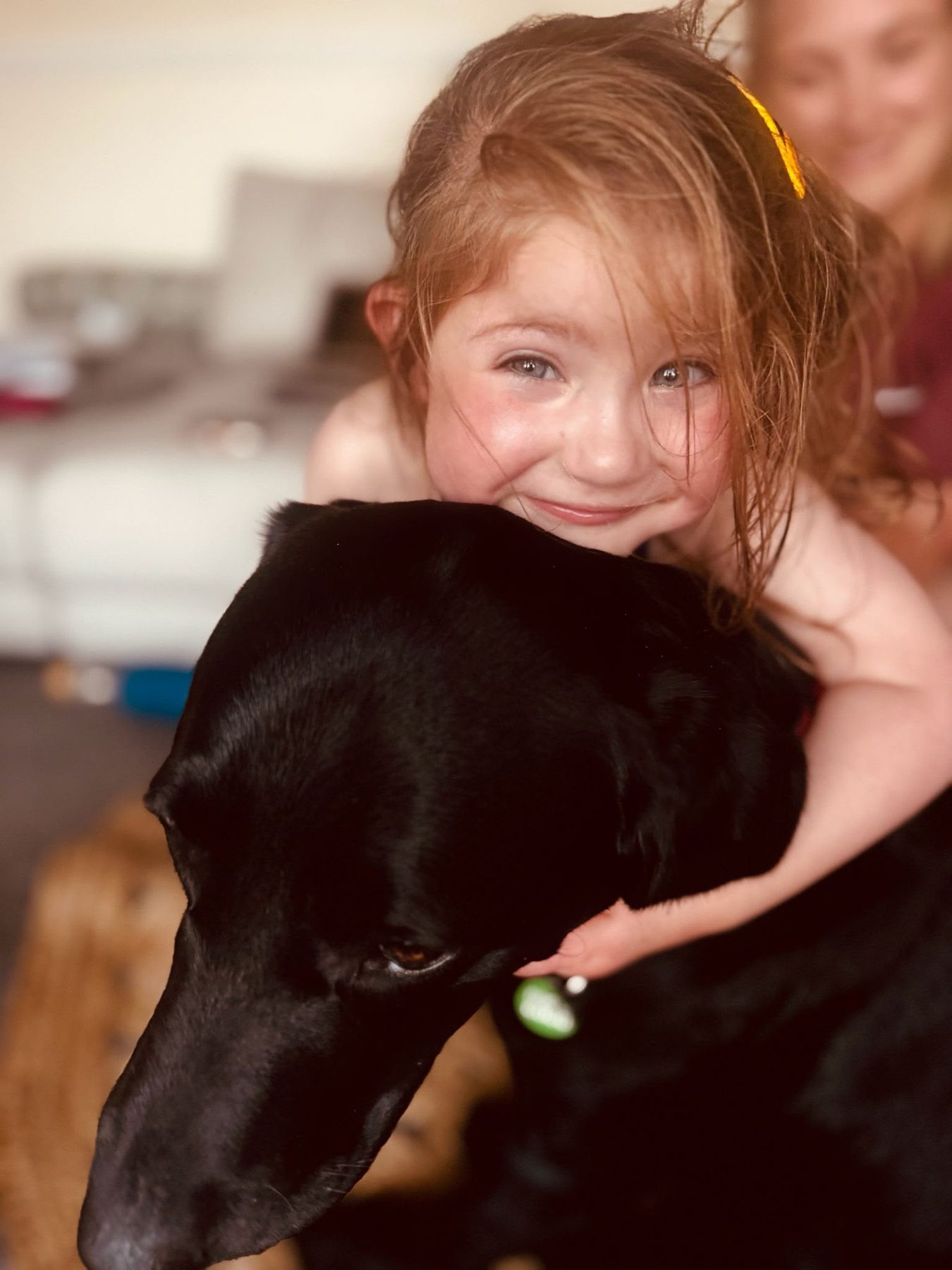
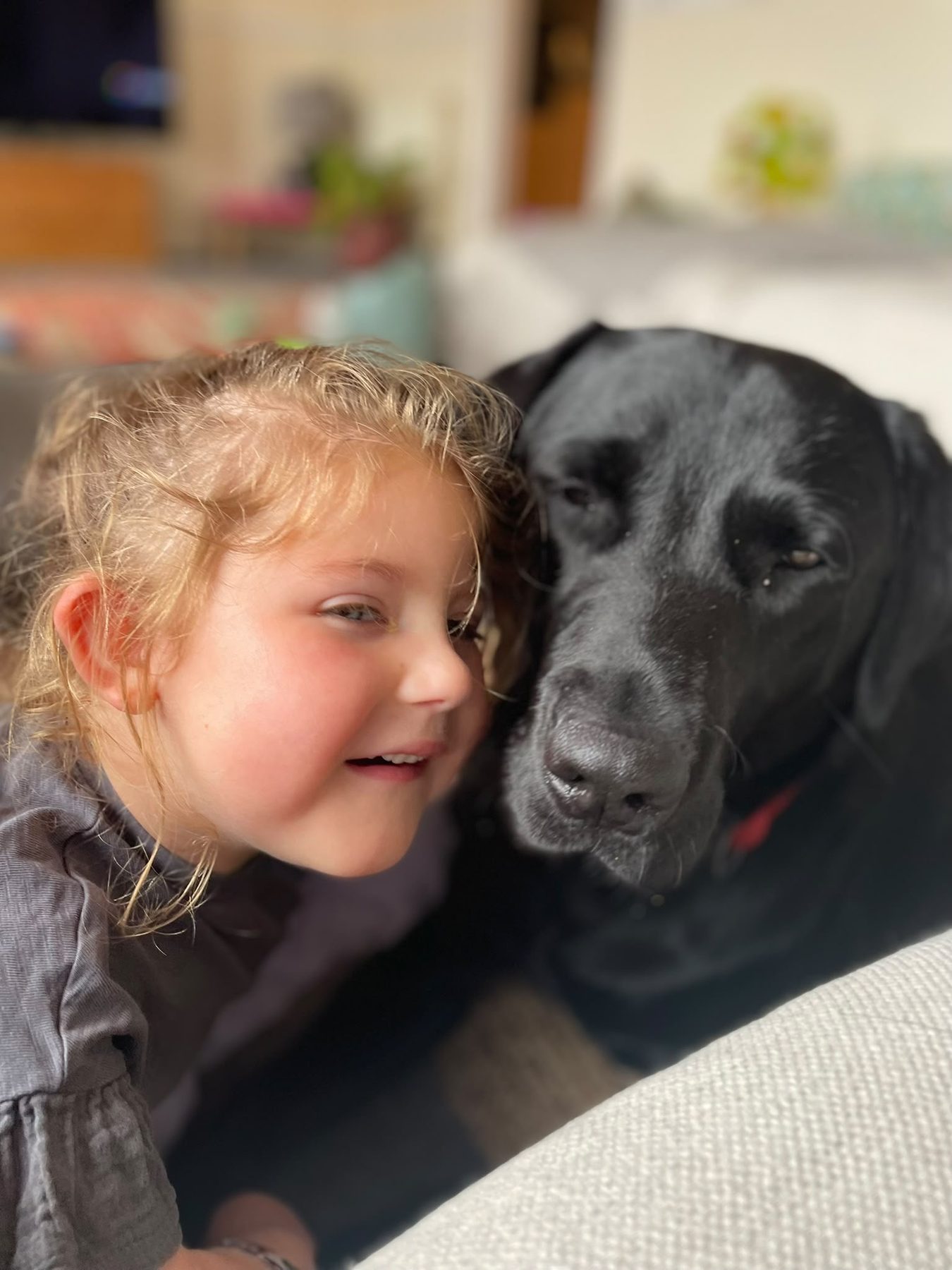
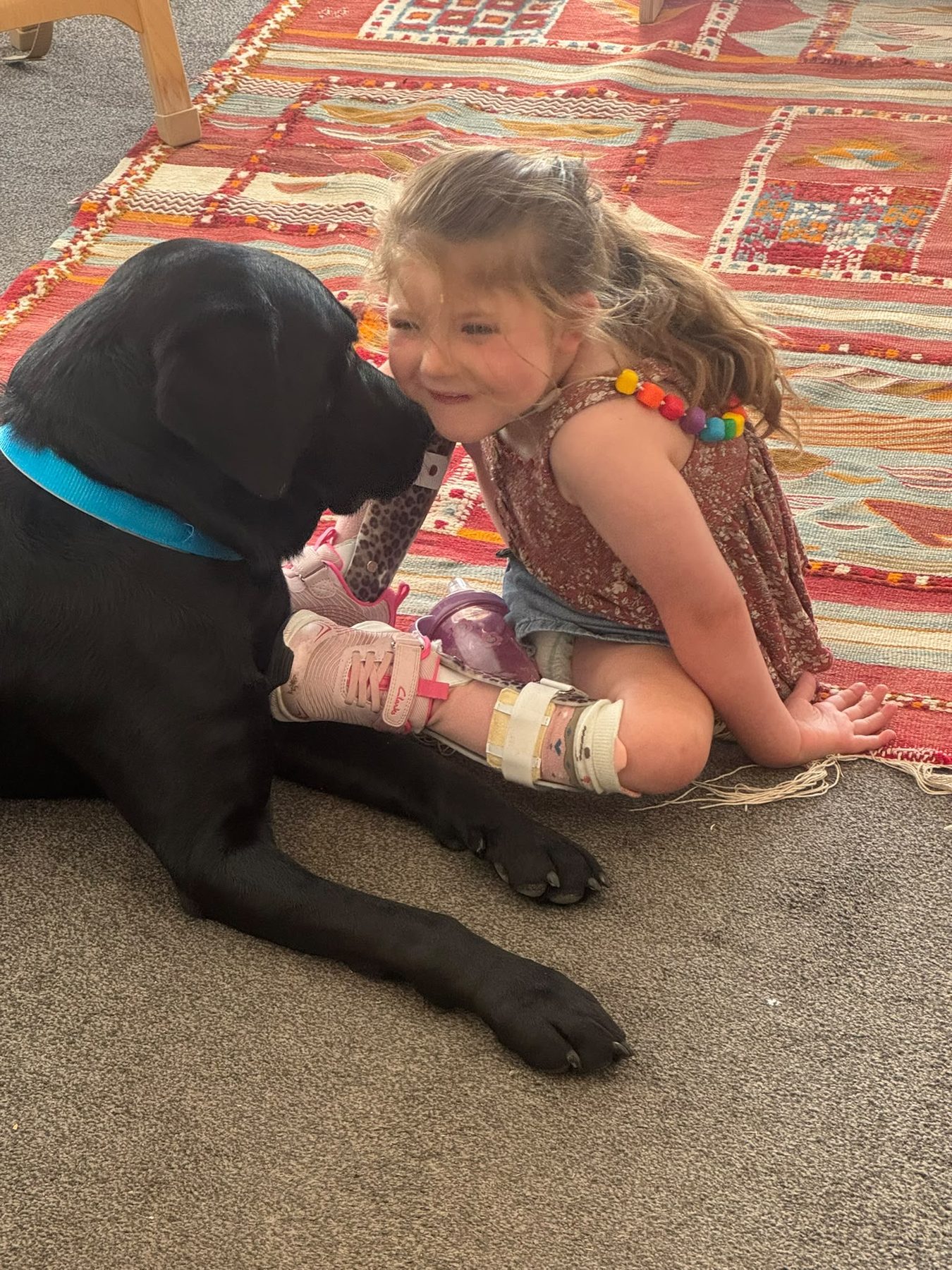
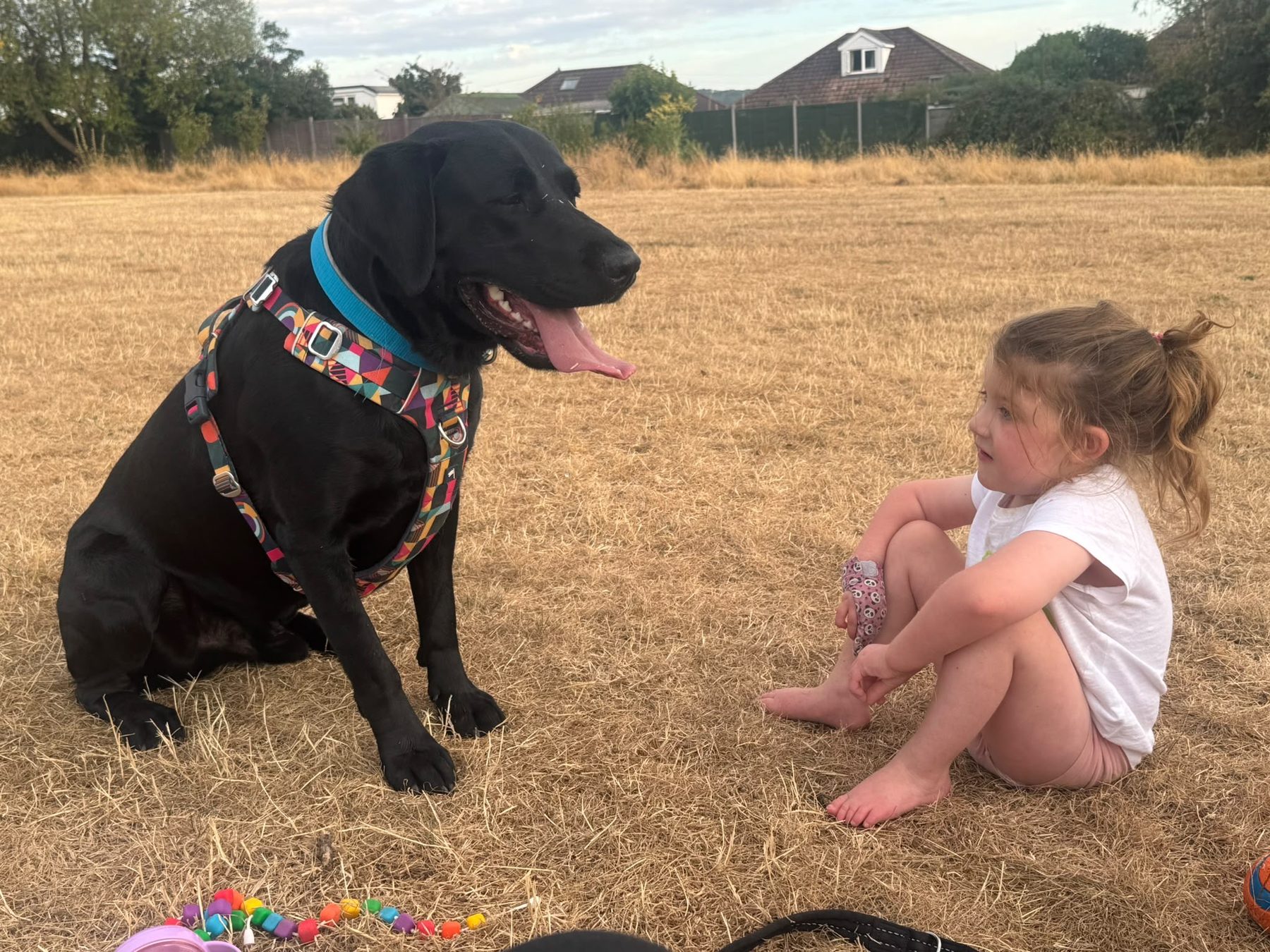
Effie now has a therapy dog from Dogs for Good – a black Labrador named Mikey.
“He’s being trained to help when she escalates and is very gentle and soothing,” Rachel said.
He also helps distract her from sensory‑seeking behaviours that have led to serious injuries.
“She chews a lot and her right hand is the hand that’s most affected by her spinal injury, so she doesn’t feel pain in her fingers and as a result, she bites her fingers really deeply – Mikey helps with distracting her from doing that.”
Why Effie’s Story Matters
Effie’s journey highlights the realities families face:
- Delayed diagnosis
- Rare cancers with dismal prognoses
- Life‑changing disabilities caused by treatment
- The emotional toll of constant medical uncertainty
- The stigma and misunderstanding around hospice care
Rachel wants people to understand that hospice care is not about giving up.
“I now know that hospice care isn’t always about end of life… it helps children live.”
Effie’s story shows exactly why Jessie May exists – to support families through the unimaginable, in the place they feel safest: home.
“They sit with you in it… they don’t try to fix it. That’s what you need.” Rachel said.
Victoria Tarr, Jessie May Oncology nurse, said:
“Children surviving cancer is a medical success story, but what happens next is often a social failure. Families like Effie’s are burned out, isolated, and navigating life‑changing disabilities with little support. Rachel and Leighton aren’t just recovering from the trauma of cancer; they became full‑time carers overnight for a child with complex, lifelong needs. At Jessie May, our hospice‑at‑home care doesn’t just help children at the end of life – it helps families live.”
For families navigating childhood cancer, disability, and trauma, Jessie May provides stability, compassion, and specialist care that changes lives. Find out more about our oncology service here – Oncology Care Service – Jessie May
This month, we acknowledge every child affected by cancer, every family living with uncertainty, and every professional and organisation providing vital care and support. By sharing stories like Effie’s, we can challenge misconceptions, improve understanding, and help ensure that no family faces the unimaginable alone.