
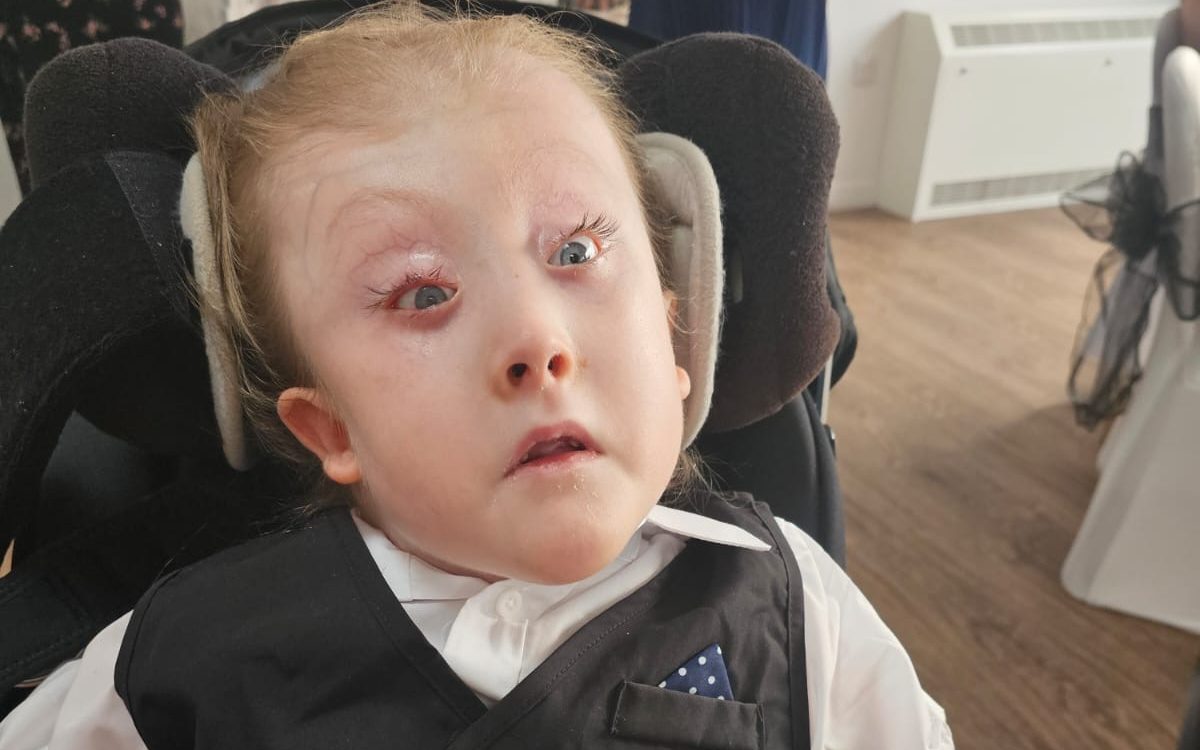
Harry was born at 29 weeks, one of twins, with severe skull and brain abnormalities. “Anything a baseball cap would cover has no skull,” Sarah explained. “He has very little brain, and what brain is there is very underdeveloped.”
From the moment he arrived, Harry’s life was uncertain. “We were told pretty much hourly that he wasn’t going to survive the next hour, let alone the next day,” Sarah said.
His early months were traumatic. Shortly after birth, Harry needed emergency surgery and was transferred between hospitals, but no one told Sarah whether he had survived. “I didn’t know from when he left until he was back whether he was alive or dead,” she said.
At the same time, Sarah herself was seriously unwell after developing pre‑eclampsia and HELLP syndrome, leaving her just minutes from seizures when the twins were delivered. Recovering while trying to understand Harry’s complex medical needs made those first days even more overwhelming.
Despite everything, Harry survived. And Sarah became his strongest advocate. Throughout her pregnancy, she was repeatedly told Harry was “not viable.” “Every appointment we were told to terminate him,” she said. “But he kicked first. He kicked the strongest.” She refused to give up on him.
And then when he was born, numerous doctors told them that Harry would not survive and encouraged them to withdraw life support and take him home to die. But Harry didn’t die. He kept fighting – hour after hour, day after day – defying every medical expectation. And from that moment on, Sarah remained the person who insisted he deserved the chance to live the life he was fighting so hard to hold onto.
Harry Today
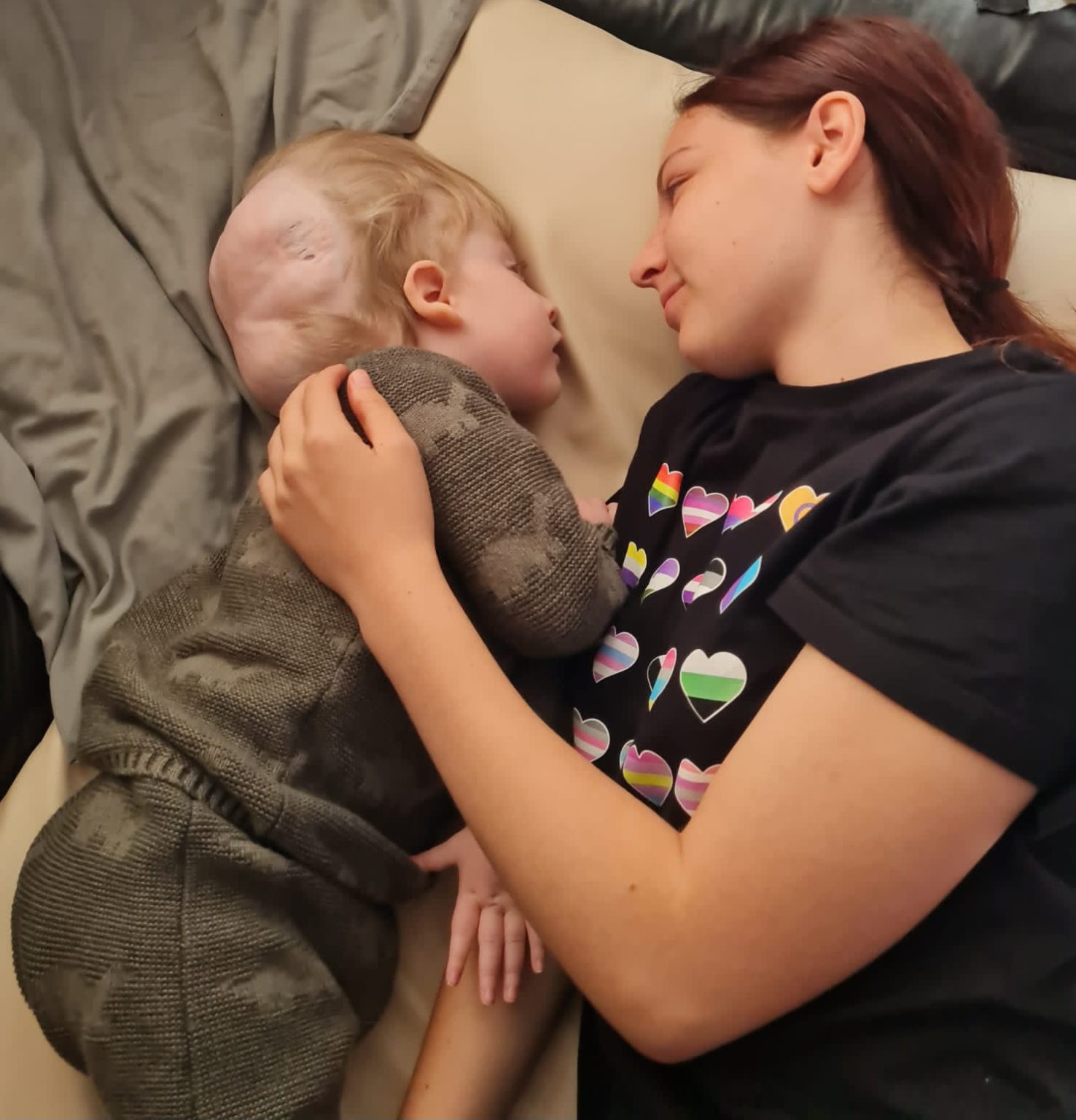
Harry and sister Freya
Today, Harry is eight but developmentally between newborn and a six‑month‑old. He cannot support his head. He is tube‑fed, requires suctioning, blended diet feeds, seizure management, and constant monitoring. “He needs a lot of support,” Sarah said. Becoming a parent‑carer is a lot for anyone to navigate, but Sarah speaks about it with quiet humility and strength. “You just do it,” she said. “You’ve got no choice.”
But Harry is not defined by his medical needs. He is expressive and full of personality. “He’s very cheeky,” Sarah said with a smile. His face lights up when familiar voices, like the Jessie May nurses, enter the room. “He knows voices. You can say, ‘Andy’s coming today,’ or ‘Bryony’s coming,’ and he’ll light up.”
Even without words, Harry communicates happiness and recognition, especially with the people who know him best.
Daily Life and Barriers
The challenges extend far beyond medical care. Public transport is a constant battle, and because the family doesn’t drive, it’s their only option. That means every trip requires planning, patience, and navigating systems that aren’t built with children like Harry in mind.
“They tell you he’s too big to be in a buggy and say, ‘Take him out,’” she said. “I’ve had somebody follow me down the road shouting abusively because I wouldn’t take Harry out of his wheelchair.”
Accessibility is another barrier. Changing places are rare. Hoists are almost never available. “You need to make sure there’s somewhere you can lie Harry and change him,” she said. “Otherwise you’re on the floor in a disabled toilet.”
Summer brings extra pressure – heat triggers seizures, public transport is busier, and days out require meticulous planning. Sometimes Sarah has to leave Harry at home, sometimes in the care of a Jessie May nurse, so she can take her other children out safely. “Then you have the mum guilt,” she said. “But where you’re going, it might not be wise to include Harry.”
Sibling support is vital too. Her daughter Bonny, Harry’s twin, loves Harry very much but struggles with the reality of his condition. “She asks, ‘When’s Harry going to walk and talk and play like I do?’” Sarah said with sadness. “She’s getting to the age where she understands people dying, and we’ll have to have that conversation at some point as well.”
The Impact of Jessie May
Through all of this, Jessie May has been there since Harry was three months old. “We are very lucky that we have had Andy and Lois supporting us as long as they have. They know us all as a family and they can see when things are becoming a bit heavy for any of us, and how to lighten the mood.”
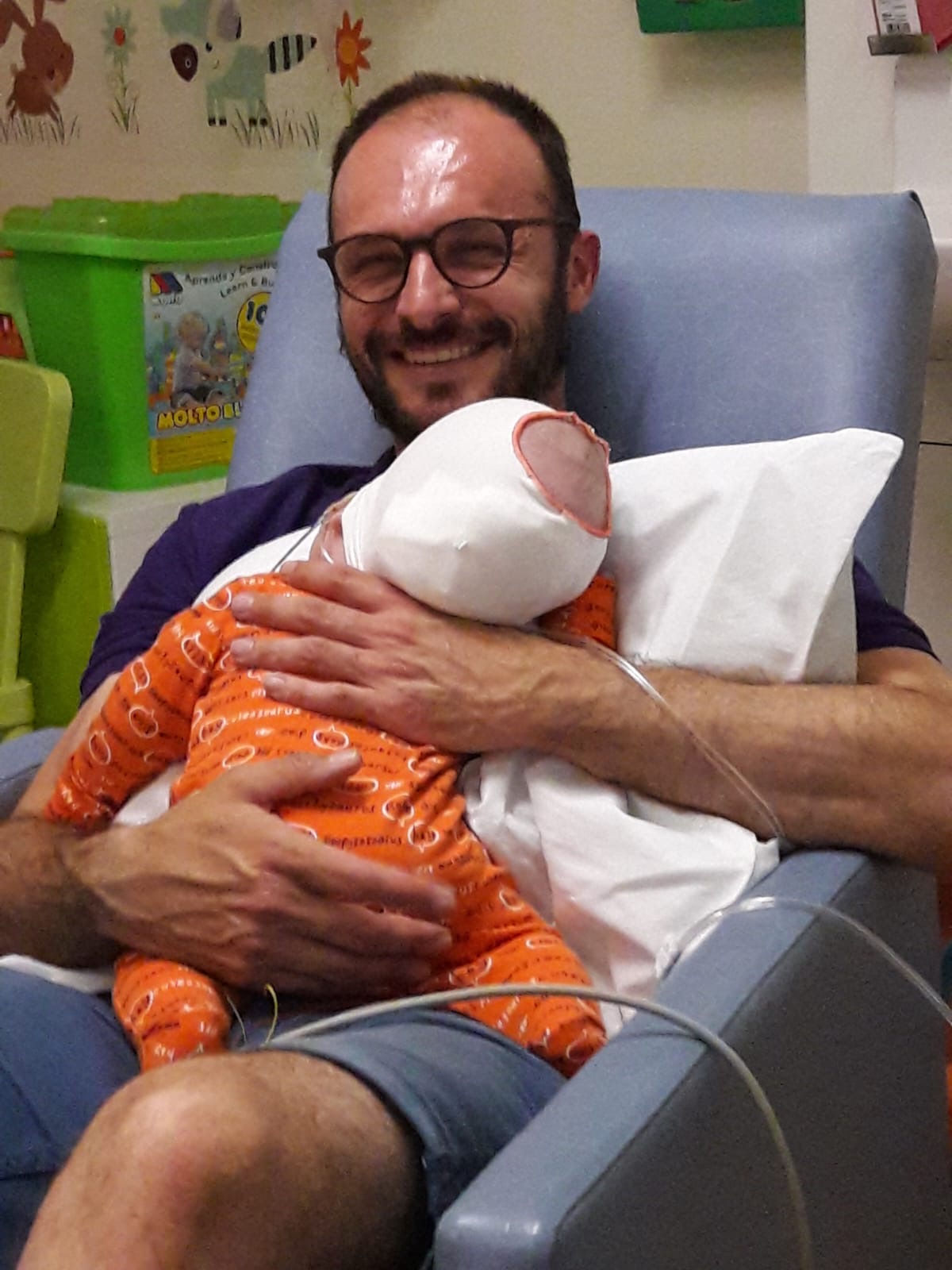
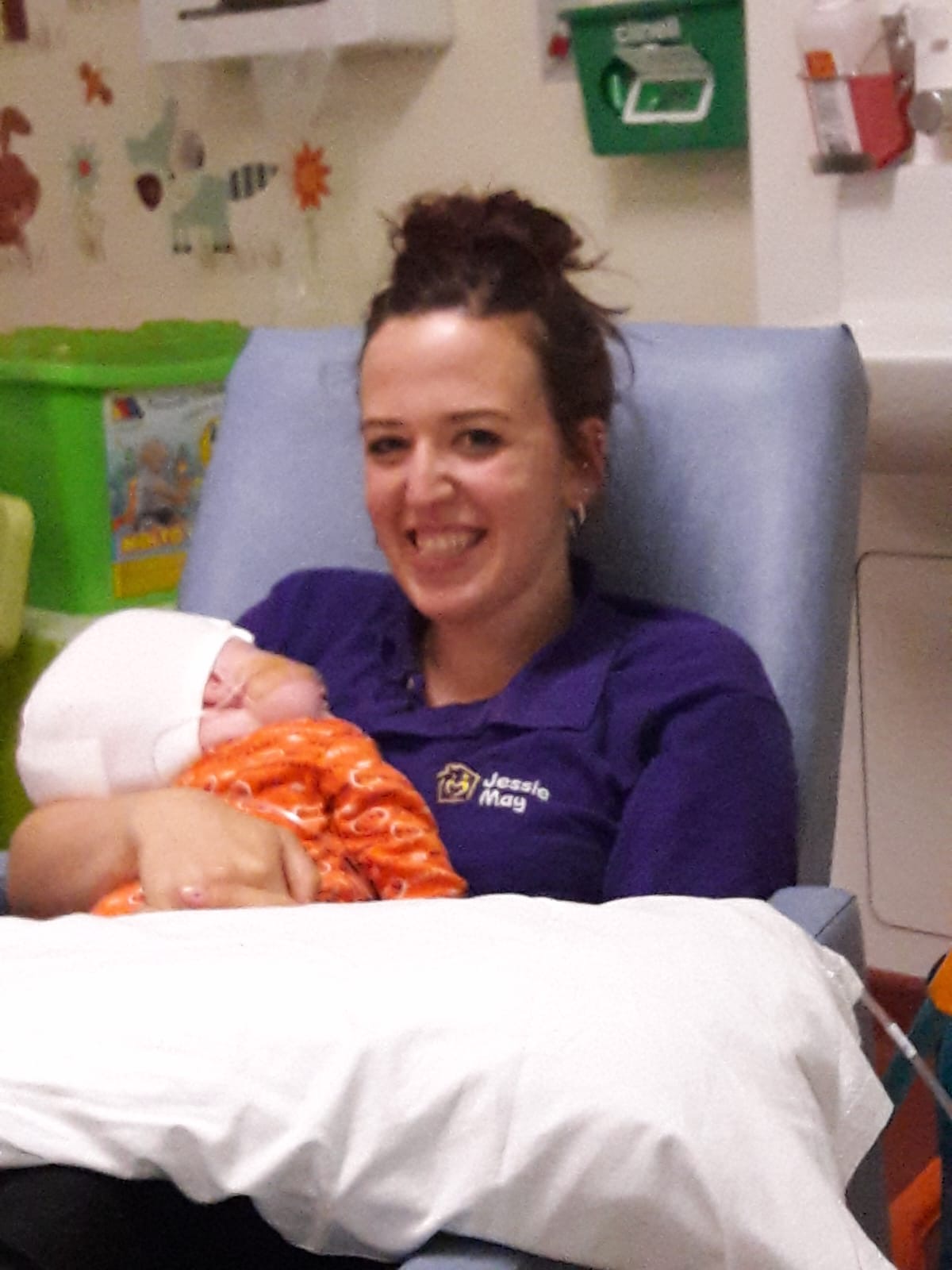
Nurse Andy and newborn Harry Nurse Lois and newborn Harry
She is also incredibly grateful for the stability and continuity they bring. “When you have a team that’s been with you for so long, they’re not just Jessie May anymore. They’re family. You feel safe and confident that no matter what’s going on, they’re not going to be flustered because they know what they’re doing.”
And Harry feels that connection too. “He’s non‑verbal, but his face lights up,” Sarah said – a small but unmistakable sign of trust and recognition.
Her story is one of advocacy, resilience, and the reality families face every day – and a reminder of why specialist support like Jessie May is not just helpful, but essential. It is the kind of support that steadies families through the hardest moments, strengthens them in the everyday ones, and ensures they never have to face any of it alone.