
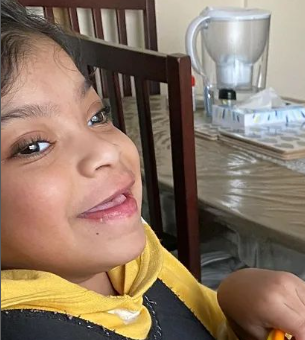
When Sumra talks about her daughter Aisha, there’s a quiet strength in her voice.
Aisha, who turns 12 next month, lives with a rare condition called fucosidosis – the same condition her older brother Farhan had. It is a genetic, autosomal recessive lysosomal storage disorder that has affected Aisha’s hearing, her everyday abilities, and her confidence around unfamiliar people. “She doesn’t like too many adults surrounding her,” mum Sumra explains. “She’s okay with the children in her classroom, and the adults she knows. Anyone other than that, she gets very conscious.”
Aisha was diagnosed at birth. Because Farhan also had the condition, all of Sumra’s children were tested early. Farhan was diagnosed at six years old, and Jessie May began supporting the family when he was eight. “He would have been 26 this year,” Sumra says softly. Farhan passed away, and the loss changed everything.
In the middle of that grief, Aisha’s older sister Zainab stepped into a role no teenager expects to take on.
“She’s been a young carer since Farhan passed away,” Sumra says. “She’s done a lot. She’s like a second mum for Aisha.”
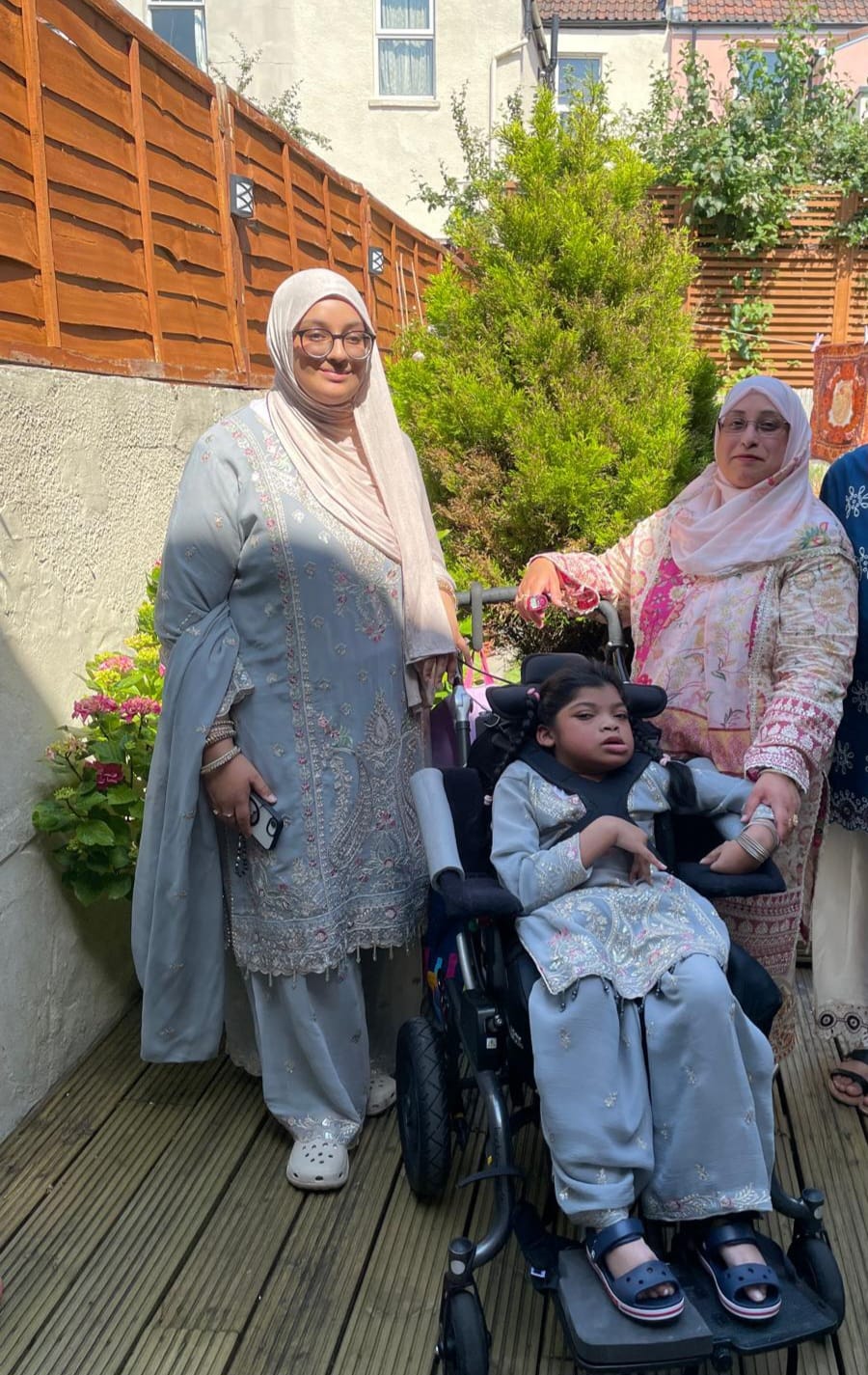
Zainab, Aisha and Sumra.
Now 18, Zainab has just finished college and is preparing for university, but she still wants to stay at home so she can continue supporting her sister.
Zainab helps with everything: peg feeding, medication, showers, personal care, and the daily routines that keep Aisha safe and comfortable. She has balanced caring responsibilities with A‑levels, college, and her own future plans. “She doesn’t want to move away,” Sumra says. “She wants to stay at home and go to uni at the same time.”
Life for the family is carefully managed. Aisha is vulnerable to illness and can become unwell very quickly, often needing weeks to recover. Trips out require planning and precautions. Even at school, too many unfamiliar adults can overwhelm her.
Through all of this, Jessie May has been a constant presence.
Support from Jessie May began when Farhan was a child, and continued when Aisha was born. The relationship has grown over years of visits, hospital stays, and moments of crisis.
“They supported me a lot,” Sumra says. “Nurse Bryony visited me at the hospital. Tracy too. It really did help.”
For Aisha, trust took time, especially after COVID, when visits paused and routines changed. But with patience and familiarity, Jessie May nurses became part of her safe circle. They take her out for walks, spend time with her, and give Sumra precious breathing space.
“I also get to spend time with my other children. I even went to the cinema once – things I would never be able to do without the help.”
Those small moments matter. They allow Sumra to reconnect with her family, rest, or simply catch up on life. They also help Aisha feel secure during events or outings that might otherwise overwhelm her.
“Knowing she has someone she’s familiar with – it’s a great help,” Sumra says.
Sumra now works part‑time as a support worker, fitting her hours around school drop‑offs and pick‑ups. Her days are full, her responsibilities constant, and her resilience remarkable. Yet she speaks with warmth, gratitude and pride, especially when talking about Zainab and Aisha.
When asked if there’s anything else she wants people to know, Sumra doesn’t hesitate.
“Jessie May has been absolutely amazing. And I certainly don’t know what I would do without Zainab”, she said proudly.
Her words reflect what so many families tell us: that being heard, understood and supported can transform the hardest days into something manageable, and remind parent carers, and young carers, that they are not alone.
Carers Month
Looking ahead, we want to see a future where both parent carers and young carers are recognised, supported and valued for the vital roles they play. Families like Sumra’s shouldn’t have to navigate complex systems alone or sacrifice their own wellbeing to keep everything going. We want earlier, more consistent practical and emotional support; clearer pathways for young carers in education and community settings; and services that listen to families, understand their realities, and respond with compassion. Most of all, we want carers of every age to feel seen, heard and supported – not just during Carers Month, but every day.